Showing posts with label it. Show all posts
Showing posts with label it. Show all posts
Monday, December 26, 2016
SISTAR performs Shake It on M! Countdown ahead of official comeback
SISTAR performs Shake It on M! Countdown ahead of official comeback

Article: M! Countdown SISTAR performs Shake It ahead of official comeback
Source: Sports Chosun via Nate
1. [+275, -34] Theyre not perfect beauties but theyre sexier than you think and sing well for idols. Theyre also a group that comes out with songs that ages of all generations can hum along to and enjoy.
2. [+156, -21] They have pretty legs
3. [+114, -25] I miss you so much SISTAR, and love you crazily. Please hurry with your comeback. I want to listen to SISTARs music >3<
4. [+21, -13] Ugly ??? but they have good songs
5. [+18, -5] SISTARs always got the bodies, especially their proportions ??
6. [+18, -4] Ah~~~~~~~ those muscles
7. [+18, -4] Their bodies are daebak
8. [+14, -4] Wow their legs are so smooth
9. [+11, -5] I love all of SISTAR and their songs ??? cant wait to see what their next dance will be
10. [+8, -0] Cant have summer without SISTAR ???? I want to go running to their music already!
-
download now

Sunday, December 25, 2016
Detached Retina What Causes It
Detached Retina What Causes It
You may have heard of someone having a detached Retina and wondered what that is and what might have caused it to occur.
First, let’s talk about the Retina. The Retina is located at the back of the eye and is made of many layers of cells and nerves that sense light and capture a picture. The picture then is sent to the brain. The eye is like a camera, with the light being focused by the front of the eye. Like a camera that uses film, the retina is like the film lining the back of the camera with the lens focusing light onto it.
When the Retina detaches, it loses its normal position and separates from the wall of the eye. When it is not in the proper position it cannot function properly and vision will be blurred. This is a serious problem, a blinding eye problem, and needs to be treated to try to prevent permanent blindness.
So, how does the Retina become detached? There are a few different causes.
The middle of your eye is filled with a clear gel called the vitreous and it sits close to the retina. Over the years, the vitreous liquefies, in both young people and old. It often changes position and separates away from the Retina. This generally doesn’t cause a problem. Sometimes it may pull away and cause a hole or a tear the Retina. This tear can occur in one or more places. This can allow fluid to pass through the hole or tear, causing the retina to lift away from the back of the eye, similar to wallpaper peeling from a wall.
Are there any warning signs? New flashing lights, new floaters, or a shadow in the side of your vision could be the first signs of a retinal tear or retinal detachment, but not always. If you see any of these, it is recommended you contact your ophthalmologist for further examination.
If you are experiencing any of these symptoms, please contact D’Ambrosio Eye Care, by phoning 800-325-3937.
download now
Twin sisters make it to the Miss Korea finals for the first time in contest history
Twin sisters make it to the Miss Korea finals for the first time in contest history

Article: Twin sisters make it to Miss Korea finals... first time in contest history
Source: Yonhap News via Naver

1. [+109, -15] Theyre both pretty
2. [+83, -9] Despite being fraternal twins, theyre both pretty. Cant fool blood.
3. [+83, -12] All of the ajusshies in their thirties and forties are in here~~~ whoever at Naver implemented comment analytics should get an award ????????????? its hilarious looking at it
4. [+75, -12] Ajusshis hard at work in this article ??
5. [+53, -15] Their parents must be doubly proud~!!
6. [+16, -5] Ewww all the commenters are men in their thirties and forties in here
7. [+12, -5] I wonder what their parents look like for both fraternal twins to be this pretty
-
download now
Sunday, December 18, 2016
How Important Is It to Wash New Clothes Before Wearing Them
How Important Is It to Wash New Clothes Before Wearing Them
How Important Is It to Wash New Clothes Before Wearing Them?
January 30, 2016 | 250,122 views
By Dr. Mercola
Raise your hand if youre guilty of bringing home a new shirt or pair of pants from the store and wearing them, sans washing. Its very common, maybe even typical, as many fabrics look pristine when theyre fresh off the rack.
You probably assume theyre clean or at least relatively so, but tests conducted by Philip Tierno, Ph.D. director of Microbiology and Immunology at New York University, at the behest of Good Morning America, uncovered some disturbing compounds lurking on clothing.
And this is only one reason to consider washing before wearing. Many clothing items are also contaminated with chemicals and dyes that may lead to irritation or other health issues.
Even insects (like lice) could potentially be transmitted on new clothes. If youre currently not a washer-before-wearing type, you may change your mind by the end of this article.
Feces, Respiratory Secretions, Vaginal Organisms and More
Tierno tested pants, blouses, underwear, jackets and other clothing items purchased from chain clothing stores (including both high-end and low-end options). The tests revealed a number of unsavory compounds lurking on the "new" clothes, including:1
- Respiratory secretions
- Skin flora
- Fecal flora
- Yeast
Perhaps not surprisingly, swimsuits, underwear and other intimate items were the most heavily contaminated. Tierno told ABC News:2
"Some garments were grossly contaminated with many organisms … indicating that either many people tried it or ... someone tried it on with heavy contamination …
In a sense, you are touching somebodys arm pit or groin. So you want to be protected thats all … You may not come down with anything and, most cases you dont, but its potentially possible."
What types of illnesses could you potentially get from trying on contaminated clothes? Organisms that cause hepatitis A, travelers diarrhea, MRSA, salmonella, norovirus, yeast infections and streptococcus are all fair game when it comes to clothing items tried on by multiple people.
Even lice and scabies could potentially be transmitted by trying on clothes. Is it likely? No. Possible? Yes, particularly if your immune system is not functioning up to par. Tierno told The Huffington Post:3
"The good thing is that most people have a very robust immune system, so they can usually fight off the small number of organisms they may get on their body … The fact that you come into contact with one doesnt mean youre going to get sick."
Chemical Contaminants: Another Reason to Wash New Clothes
Depending on what country your new clothes were manufactured in, they may contain multiple chemicals of concern. Among them are azo-aniline dyes, which may cause skin reactions ranging from mild to severe.
If youre sensitive, such dyes may leave your skin red, itchy and dry, especially where the fabric rubs on your skin, such as at your waist, neck, armpits and thighs. The irritants can be mostly washed out, but it might take multiple washings to do so.
Formaldehyde resins are also used in clothing to cut down on wrinkling and mildew. Not only is formaldehyde a known carcinogen, but the resins have been linked to eczema and may cause your skin to become flaky or erupt in a rash.4
Nonylphenol ethoxylate (NPE), meanwhile, is a toxic endocrine-disrupting surfactant used to manufacture clothing.
You certainly dont want to be exposed to NPE if you can help it, but when consumers wash their clothes, NPEs are released into local water supplies where wastewater treatment plants are unable to remove them.
When NPEs enter the environment, they break down into nonylphenol (NP), a toxic, endocrine-disrupting chemical that accumulates in sediments and builds up in fish and wildlife.
Chemicals May Lurk in Your Clothing Even After Washing
Unfortunately, washing wont remove all the chemicals in your clothing. For instance, the antimicrobial triclosan is sometimes added to fabrics, including clothing. Research has shown that triclosan can alter hormone regulation and may interfere with fetal development.
Animal studies have also raised concerns about its ability to affect fertility, and bacteria exposed to triclosan may also become resistant to antibiotics. Even an increased cancer risk has been suggested.
Stain-proof clothing, meanwhile, is a common source of perfluorinated compounds (PFCs), which are toxic to humans and the environment. Youll most often hear about PFCs in relation to non-stick cookware, but theyre also common in fabrics.
Unless the clothing you buy is organic, it also is likely made from genetically engineered (GE) cotton that is heavily treated with pesticides and other chemicals during production. The Organic Consumers Association (OCA) explained:5
"The chemicals used in cotton production dont end with cultivation. As an aid in harvesting, herbicides are used to defoliate the plants, making picking easier.
Producing a textile from the plants involves more chemicals in the process of bleaching, sizing, dying, straightening, shrink reduction, stain and odor resistance, fireproofing, mothproofing, and static- and wrinkle-reduction.
Some of these chemicals are applied with heat, thus bonding them to the cotton fibers. Several washings are done throughout the process, but some of the softeners and detergents leave a residue that will not totally be removed from the final product.
Chemicals often used for finishing include formaldehyde, caustic soda, sulfuric acid, bromines, urea resins, sulfonamides, halogens, and bromines.
Some imported clothes are now impregnated with long-lasting disinfectants which are very hard to remove, and whose smell gives them away. These and the other chemical residues affect people with Multiple Chemical Sensitivities.
Also, people have developed allergic reactions, such as hives, to formaldehyde through skin contact with solutions on durable-press clothing containing formaldehyde."
Conventionally Grown GE Cotton Is the Worlds Dirtiest Crop
You might be surprised to learn that cotton is considered the worlds dirtiest crop due to the cotton industrys heavy use of hazardous herbicides and insecticides, including some of the most hazardous insecticides on the market. According to the Organic Trade Association:6
"Cotton is considered the worlds dirtiest crop due to its heavy use of insecticides, the most hazardous pesticide to human and animal health. Cotton covers 2.5% of the worlds cultivated land yet uses 16% of the worlds insecticides, more than any other single major crop.
Aldicarb, parathion, and methamidopho, three of the most acutely hazardous insecticides to human health as determined by the World Health Organization, rank in the top ten most commonly used in cotton production.
All but one of the remaining seven most commonly used are classified as moderately to highly hazardous.
Aldicarb, cottons second best selling insecticide and most acutely poisonous to humans, can kill a man with just one drop absorbed through the skin, yet it is still used in 25 countries and the US, where 16 states have reported it in their groundwater."
As you might suspect, this is hazardous on multiple levels — for the farmers working with these chemicals, the people living nearby, the consumers buying the cotton and virtually everyone else, who will eventually be impacted by this widespread environmental pollution.
This is one reason why I strongly encourage you to choose organic cotton clothing whenever possible — it will not be genetically engineered and subject to this onslaught of toxic exposures.
Top Tips for Safer Clothing
Looking for clothing made from organic cotton is an excellent start to finding safe, non-toxic clothing (for you and the environment). You can also look for the OEKO-TEX Standard 100 label, which is indicative that it has been tested by an independent laboratory and found to be free of harmful levels of more than 100 substances, including:
- Azo dyes
- Phthalates
- Heavy metals
- Pesticides
- Allergenic dyes
Finally, many experts do recommend washing new clothes when you bring them home from the store, maybe even twice. If the article of clothing cannot be machine washed, consider running it through a cycle in a hot dryer before wearing it.
You may also want to keep on some clothes while trying on new clothing at a store (at least leave on your undergarments, and then wash those too when you get home). Washing your hands after shopping is also a good idea, as youve been handling clothing that could have any number of chemicals and other contaminants on them.
download now
Tuesday, December 13, 2016
Monday, December 5, 2016
Oncology Dr Cancer is a Fungus and it can be Treated Using Sodium Bicatbonate by Tulio Simonicino
Oncology Dr Cancer is a Fungus and it can be Treated Using Sodium Bicatbonate by Tulio Simonicino
Oncology Dr: "Cancer is a Fungus and it can be Treated Using Sodium Bicarbonate"
Tulio Simoncini is a former Italian oncologist in Rome who developed a theory that all cancer is caused exclusively by a fungus called Candida albicans.
“Cancer is a fungus, called Candida albicans, and it can be treated using sodium bicarbonate”.
His natural cancer cure is actually a simple treatment. He believes that the body and tumor needs to be alkalized, and this can be done using a cheap, common compound.
This is actually sodium bicarbonate which is used to tackle the Candida, shrink the tumor and thus stop metastases.
Acid bodies, sodium bicarbonate, Candida, beneficial bacteria, and cancer
Simoncini’s work rests on four theoretical elements, which are the following: Initially, acid bodies, since they are known to be related to health issues and cancer.
Secondly, the body can be alkalized using sodium bicarbonate, which is known to have been used as antacid, an ingestion aid in many preparations. A small pot of this ingredient can be found for a little over one pound in high street chemists.
Thirdly, the beneficial bacteria in your intestine are now known to direct up to 85 per cent of your immune response, to release anti-cancer vitamins (like biotin, B-12, folic acid, vitamin K) from your foods and even to produce a compound (sodium butyrate) which causes cancer cells to self-destruct. Beneficial bacteria work imperfectly if the acidity of the gut increases.
Fourthly, the first line of defense consists of beneficial bacteria. At night when you sleep, a vast quantities of microbes, fungus and yeasts that you consumed during the day with your food are digested by beneficial bacteria.
Actually, the favorite food of beneficial bacteria is the yeast or fungus, Candida albicans.
Candida and cancer
Yeasts like Candida are anaerobes, which means that they generate their energy in the absence of oxygen. When in the blood stream, they can colonize certain local areas of the body and greatly reduce the oxygen levels in that area.
Consequently, the local cells do not die, but switch their own energy production from an oxygen-based system to one that doesn´t use oxygen.
Testimony: Heres How I Healed My Mother’s Skin Cancer With Baking Soda
Cancer cells do not use oxygen to generate their energy from food molecules so they employ this same system. In fact, Otto Warburg won a Nobel Prize in 1931 for telling the world this property of cancer cells and that oxygen was their enemy!
Candida Albicans is possesses a property to escape the intestine and travel around the body in the blood stream. The yeast in the bloodstream can be killed by oregano oil and cinnamon. About 25 percent of type-2 Diabetics were shown to improve when given cinnamon.
This is due to the fungus sitting on the outer membranes of cells, preventing crucial receptor sites from working properly – in the case of diabetes, those receptor sites are for insulin.
Moreover, Candida also produces a sugar-like waste product, so people with higher blood sugar levels develop more cancer and survive less.
Therefore, the results of a research covered in CANCER actives research service Cancer Watch come as no surprise, showing that women who had taken antibiotics more than 25 times during their lifetime had twice the risk of breast cancer.
Related: The #1 Enemy of the Big Pharma Cartel is... Baking Soda!
Their immune systems were weak, indicated by the illnesses that required the antibiotics. In addition, their friendly bacteria were reduced allowing Candida more chance to survive in the gut and move to the blood stream.
Dr Simoncini was a respected Italian Oncologist who developed his theory that all cancers are caused by the fungus Candida albicans.
Furthermore, he believed that the cure of cancer is to alkalize the body in order to produce conditions in which the Candida could not thrive. What is even more important, this can be done using an inexpensive and easily attainable weapon: baking soda.
His main weapon is the inexpensive, sodium bicarbonate. Even though his discoveries and remarkable theory were of greatest importance, he was struck off in Italy.
Continue reading: Oncologists Dont Like Baking Soda Cancer Treatment Because Its Too Effective and Too Cheap
References: Healthy Food House; Complete Health and Happiness; Cancer Active; E-Farsas;
download now
Thursday, December 1, 2016
Faking it Part 3
Faking it Part 3
Ive had many people say to me "Wow. Megan, for being so young, you guys really have your crap together." or "Its refreshing to see such a young person handling their business."
If only they knew that I have at least five empty shampoo and/or conditioner bottles in my shower right now because I cant be bothered to take the five seconds to scoop them up and toss them away.
Two of them I bought from a store in the Azores when Bryan and I went. In 2011. They were nearly full when we left so I brought them back with me and continued to use them into 2012. Now they are buried behind my other shampoo bottles that may or may not be empty. Ill be completely honest when I say that I have thought to throw those away. Multiple times. Yet, I shower, get out of the shower and I dont think of them again. In fact, I didnt realize they were still there until I moved another shampoo bottle and saw them at the back of the shelf and was sure I had thrown those away.
Lets not talk about the stack of magazines I have on the secretaries desk in the kitchen that I swear Ill go through and yet... I havent. There they sit. I wont even mention the whole laundry debacle again.
This, to me, does not signify someone that handles their business. Yes, bills get paid. Yeah, we dont have any debt other than one car and this house. Sure, we have retirement plans. What we dont have are organized kitchen cupboards. Or bathroom cupboards. Or organized anything.
Bryan called me last week and said he was frustrated because he was trying to clean but he just didnt know what to do with "stuff". He didnt know where things went. I told him, "Most things dont have a place. Feel free to create whatever system you want and well adjust if we need too."
He ended up cleaning our bathroom. Which was awesome, for sure. But doesnt really require creating a play-by-play. I dont blame him at all. Its an overwhelming task, trying to create a system for all that life entails. For example, the mail. I imagine that a normal family would grab the mail from the box, bring it inside and place in in a mail holder of some sort. If that person is an adult, they might sort out any junk mail and toss it, grab any ads from grocery stores and stick it next to a grocery list or on the fridge with a magnet. Another adult, maybe the one mainly in charge of the finances would go through the mail, jot down when things are due and file it in a binder. When payday comes and its time to write checks or submit payments they go through their bills, pay what they need to, file the rest, and move on.
In our house, one of us gets the mail. From that point, this mail can end up in the following places: On the entryway table. On the couch. On the chair next to the couch. On the kitchen counters. On the dining room table. On the coffee table. On the floor. The mail is not looked at again until whenever we happen to pick up the house. The mail is opened, junk is thrown away, ads are tossed, we cant believe that mail we were waiting for was here the whole time. THERE that bill is! Then it gets shuffled around until it ends up in my office where it is placed in a large stack of all the other papers. Generally, we dont read half of the actual pertinent mail that comes to our door.
You would think that this causes all kinds of problems but aside from the occasional oh crap! moment we pay everything on time and stuff gets handled. The main issues that occur from such a lack of structure are the following:
1. There are no expectations on how things are to be handled.
2. A relatively simple task becomes one of high stress.
3. Junk is everywhere.
4. Nothing can be found at a moments notice.
5. Momentary bickering happens about how ineffective we are as adults.
However, none of these situations have actually caused us, in almost five years of marriage, to change how we do things.
I know Ive written it before. Bryan and I wont agree on how to handle something so we chose to do nothing instead of A. figuring it out together and 2. appointing someone to take the lead in that matter.
This is so extremely unproductive. We get absolutely no where. No worse than we were before but certainly no better.
At the last second we do what needs to be done and from afar it appears as though we have it all together, but take a closer look and youll see two people who are not working in tandem. Both look a little stressed and a little rough around the edges because they are waiting for the hustle that comes as the proverbial shoe drops.
Now that we have a son, this worries me. I think about how what we do right now affects the next generation of our family. How we live our lives and run our household will affect Shepherd and how he lives his life and how he and his future wife run their household. I want there to be the right amount of structure for Shepherd. The right balance of cleaning our house and showing pride in our belongings and knowing that at any moment we would give it all up if we had too. That owning these things do not make up a person, that we cant use it to measure our lives or our worth. I want the a healthy ratio of cleaning on Saturday mornings to staying in our pajamas for cuddles and cartoons.
I dont want him to have our bad habits and I dont want him to have extreme habits because of our lack of them. I try to think of ways to fix this, to get better at managing life so that he will see it and know that it is normal. Sure, hell go through the phase of not wanting to clean his room or load his dishes in the washer, but I want to make sure that when he gets out of those phases he wont think twice about dusting his house or doing his laundry because thats what you do. Thats normal. I dont want my abnormalities to become his normality, so I somehow have to figure out how to overcome my inability to make a decision or process when it comes to my house.
I have to show him what progress looks like even if progress is slow. That you can accept your oddities and overcome them. That you dont have to run away from life or even hide in a closet with a taco.
At some point, you have to throw away the holey underpants and have faith that youll do the laundry.
download now
Thursday, November 17, 2016
Why you should not wrap your food in Aluminum Foil Before Cooking it
Why you should not wrap your food in Aluminum Foil Before Cooking it
Why You Shouldn’t Wrap Your Food In Aluminum Foil Before Cooking It
Food Science, Food Toxins, Future of Food0
If you’re baking fish, roasting vegetables or preparing a piece of meat for dinner tonight, chances are that you’ll wrap your food in aluminium foil. What you may not realize is that some of the foil will leach into your meal – and this could be bad for your health.
Research that I conducted with a group of colleagues has explored the use of aluminium for cooking and preparing food. Aluminium doesn’t just appear in foil: it is the most popular cookware material used by people in developing countries. Pots and pans are lined with it and it is found in some kitchen utensils like large serving spoons. Copper used to fulfil this role, but over time it’s been replaced by aluminium because it is cheaper to mass produce and easier to clean.
But while cooking your food in aluminium pots or pans isn’t a bad thing, placing it in foil and putting it in the oven is problematic. This is especially true with acidic or spicy food that’s prepared at high temperatures.
Aluminium and health
Human bodies can excrete small amounts of aluminium very efficiently. This means that minimal exposure to aluminium is not a problem: the World Health Organisation has established a safe daily intake of 40mg per kilogram of body weight per day. So for a person who weighs 60kg the allowable intake would be 2400 mg.
But most people are exposed to and ingest far more than this suggested safe daily intake. Aluminium is present in corn, yellow cheese, salt, herbs, spices and tea. It’s used in cooking utensils, as described above, as well as in pharmacological agents like antacids and antiperspirants. Aluminium sulfate, which is derived from aluminium, is used as a coagulant during the purification process of drinking water.
Scientists are exploring whether over-exposure to aluminium may be posing threats to human health. For instance, high concentrations of aluminium have been detected in the brain tissue of patients with Alzheimer’s disease. Scientists have examined the community of old people with Alzheimer’s and concluded that it is a modern disease that’s developed from altered living conditions associated with society’s industrialisation. These conditions may include high levels of aluminium in daily life.
Aluminium poses other health risks, too. Studies have suggested that high aluminium intake may be harmful to some patients with bone diseases or renal impairment. It also reduces the growth rate of human brain cells.
Avoid foil when cooking
Given all of these proven risks, it’s important to determine the aluminium concentration when cooking. Pots and other cookware tend to be oxidised, providing an inert layer that prevents the aluminium from leaching into food. The problem is that when you scrub your pots after cooking, that layer is worn away and the aluminium can seep into your food. This is easily avoided: when you get new aluminium pots, boil water in them several times until the base becomes matt. This creates a natural oxidation that prevents leaching. They may look nicer when they’re scrubbed and shiny, but a matt base is better for your food and your health.
But cooking your food in foil is a different story. Aluminium foil is disposable and you will not be able to create that inert layer prior to using it. My research found that the migration of aluminium into food during the cooking process of food wrapped in aluminium foil is above the permissible limit set by the World Health Organisation.
An error occurred.
Ghada Bassioni explains the research she and her colleagues conducted.
Aluminium is significantly more likely to leach into food, and at higher levels, in acidic and liquid food solutions like lemon and tomato juice than in those containing alcohol or salt. Leaching levels climb even more when spice is added to food that’s cooked in aluminium foil. Anything acidic sparks a particularly aggressive process that dissolves layers of aluminium into food.
This research suggests that aluminium foil should not be used for cooking. Instead, we’d recommend using glassware or porcelain when preparing baked dishes. It’s safe to wrap cold food in foil, though not for long stretches of time because food has a shelf life and because aluminium in the foil will begin to leach into the food depending on ingredients like spices.
 By: Ghada Bassioni, Associated Professor and Head of the Chemistry Department, Ain Shams University
download now
Thursday, November 10, 2016
It was the best of times it was the worst of times
It was the best of times it was the worst of times
This past weekend Canine Affair (our training hall) hosted a C-WAGS Obedience and Rally trial for which I served as the C-WAGS Advocate (or Representative). With the potential for hot weather and because I havent been working much to get ready, I wasnt sure Id be competing.
About 4 or 5 weeks ago, we found out that Brents father, who lives in St. Louis had inoperable (terminal) lung cancer and that he had 6-8 months to 1 year to live. At that point, he was living at home and had gone to see his doctor. When he was dissatisfied with what his doctor had to say, he decided he needed to go to the hospital. Once there, he was diagnosed with a very aggressive, untreatable cancer and it became quickly apparent that he would never go home again. Brents mother has been in a nursing home for about 10 years with advanced Alzheimers and he is an only child with a very small extended family that hasnt been close for many years. As a result, everything fell to Brent and suddenly we were trying to pay their bills, make living arrangements for his dad and take care of his mom. Unfortunately, his dads health declined quickly and two weeks ago, we were told he had 2-4 months left and he immediately went into hospice. Brent decided to spend a last fathers day with his dad so we made reservations for him to go there Friday (the 17th). He was scheduled to land at 8:00 in the morning but we got a call 5 hours before (at 3:00) letting us know that his dad had passed away peacefully in his sleep. Brent went there but instead of getting to see his dad, he had to make arrangements for his funeral, talk to the lawyer, go to the banks and the nursing home to see about his mom etc.
For all sorts of reasons, its been a stressful couple months for us and although Ive made time for continuing our service dog training, I havent been working on anything related to competition. Despite that, I decided on Saturday to try Level 1 Obedience with Hardy. Brent and I also used FaceTime to be together while making the funeral arrangements which made it an emotional day. Although we hadnt worked on all of the exercises, Hardy got one Q. On Sunday, I did Pro, Zoom 2 and ARF rally with Laurel and although she was worried about me, we got 3 Qs with 2 firsts & 1 second place. At the last minute, I decided to try Zoom 1 with Hardy. He was really on and we won the class with a 98/100! I have to admit that I was surprised and very proud of him! And he has requested that I not come out of the ring telling everyone how surprised I am when he does a good job! Funny boy!
download now
Wednesday, November 9, 2016
Tom Hanks blames himself for Type 2 diabetes diagnosis knows he can reverse it naturally
Tom Hanks blames himself for Type 2 diabetes diagnosis knows he can reverse it naturally
Tom Hanks blames himself for Type 2 diabetes diagnosis - knows he can reverse it naturally
Friday, May 20, 2016 by: L.J. Devon, Staff Writer
Tags: Tom Hanks, type 2 diabetes, natural cures
========================
========================
(NaturalNews) Most people diagnosed with Type-2 diabetes believe its a condition they will have for the rest of their lives. Convinced that there is little they can do to stop it, they accept their diagnoses and allow the pharmaceutical system to manage their condition for the rest of their lives. Its a helpless mindset, a thought process that gets imprinted into their minds by a clueless medical culture that has a hard time seeing and admitting the root causes of the metabolic problems associated with Type-2 diabetes.
Tom Hanks knows he can naturally reverse Type-2 diabetes
Type-2 diabetes can actually be reversed solely through natural lifestyle changes. Famous actor Tom Hanks knows this, and has spoke out about his problems publicly. "Im part of the lazy American generation that has blindly kept dancing through the party and now finds ourselves with a malady," he said, as reported by Womanista. "I was heavy. Youve seen me in movies. You know what I looked like. I was a total idiot."
"I thought I could avoid it by removing the buns from my cheeseburgers," he explained. "Well, it takes a little bit more than that."
Hanks has publicly remarked that he grew up learning very little about nutrition as a child, and this lack of knowledge has affected him as an adult. On The Late Show with David Letterman in 2013, he opened up about getting a diagnosis and feeling trapped with it. "My doctor said, Look, if you can weigh as much as you weighed in high school, you will essentially be completely healthy. You will not have Type 2 diabetes, And then I said to her, Well, then, Im gonna have Type 2 diabetes, because there is no way I can weigh as much as I did in high school."
Tom Hanks knows that the diagnosis can be entirely eliminated from his life, making way for an entirely new, healthy lifestyle. He has recently decided to stop compromising his health for movie roles.
"Ive talked to a number of actors who have gained weight for roles, and just the sheer physical toll it puts on ones knees and shoulders—no one wants to do it again," Hanks said at the 2013 BFI London Film Festival. "Im 57 and I dont think Im going to take on any job or go on vacation again and see to it that I can gain 30 pounds."
The good news is that Tom Hanks knows that Type-2 diabetes is something he can overcome. He just has to change key areas of his lifestyle so he can naturally reverse it.
Important lifestyle changes for reversing type-2 diabetes
- Eliminate endocrine disrupting chemicals from your life. The best place to start is by filtering your water using a scientifically-validated water purification system that removes pesticides, herbicides, heavy metals, pharmaceuticals, BPA and other plastic chemicals. Municipal water, bottled water and even well water is often a questionable soup of chemicals and metals that interfere with nutrient absorption and normal hormone activities in the body.
- Eliminate processed meats containing sodium nitrite – a meat preservative that causes problems with the pancreas, leading to insulin resistance.
- Stop consuming refined sugars and refined white bread products. This process takes time, but is important. High fructose corn syrup aggressively harms the pancreas and the metabolism, allowing the type-2 diabetes to persist.
- Add hot peppers to the diet, such as cayenne, jalapeno and habaneros. These delights have shown promise for "jump-starting" the islet cells in the pancreas that produce insulin.
- Add fenugreek seed to your diet. This hard, bitter seed is easier to consume as a powdered supplement, but nonetheless, is known for helping the body regulate insulin levels naturally.
- Plunges and surges in blood sugar can also be controlled by including more polyphenols in the diet. Polyphenols are essentially plant medicines found throughout nature. One of the most abundant classes of polyphenols is tannins which are concentrated in various herbs, leaf tissue, bark, flowers and fruits.
- Daily exercise is also a vital way to reverse diabetes, especially when that exercise is coupled with healthy sun exposure. Vitamin D, manufactured in the skin after sunlight absorption, is necessary for maintaining a healthy immune and endocrine system.
- Consuming higher amounts of superfoods and antioxidant-rich berries helps reverse diabetes. Spirulina, chlorella, astaxanthanin and blueberries are all important to include in your lifestyle.
You do not have to be fooled by pharmaceutical advertisements into believing that you need medication to manage type-2 diabetes. Pathetically, popular TV psychologist Dr. Phil has partnered with AstraZeneca to promote weekly injections of a drug that causes possible thyroid tumors, including cancer.
The bottom line is this: diabetes does not have to be a lifelong condition. You do not have to be dependent on pharmaceuticals that are only a death sentence.
Sources include:
TheEpochTimes.com
NaturalNews.com
NaturalNews.com
NaturalNews.com
NaturalNews.com
Science.NaturalNews.com
Learn more: http://www.naturalnews.com/054214_Tom_Hanks_type_2_diabetes_natural_cures.html#ixzz4AHaqP3p9
download now
Tuesday, November 8, 2016


Sunday, November 6, 2016
This Food Has 1 000 More Nutrients Than Broccoli Yet No One Ever Thinks to Eat It
This Food Has 1 000 More Nutrients Than Broccoli Yet No One Ever Thinks to Eat It
This Food Has 1,000% More Nutrients Than Broccoli, Yet No One Ever Thinks to Eat It
This article is shared with permission from our friends at thetruthaboutcancer.com.
What’s so special about broccoli sprouts? According to various researchers (including Johns Hopkins and Ohio State University), they contain 1,000 percent more nutrients than mature broccoli!
Sulforaphane, the prominent phytochemical in broccoli, combats cancer on several fronts ? including removal of carcinogens, prevention of cancer cell production, destruction of breast cancer cells, and tumor reduction. These small plants are in the cancer research limelight for their unique ability to exert 50 times the amount of cancer fighting power of broccoli.
Sprouts are easily absorbed into the system because they also contain potent digestive enzymes. Their flavor allows for easily adding them to all your favorite meals. Broccoli sprouts are also easy to grow and will keep for up to two weeks in the refrigerator.
7 Easy Steps for Growing Broccoli Sprouts
Step #1: Start with three tablespoons organic, high germination broccoli seeds for sprouting. (Click on the Sources & References link below the article for a few online sources for seeds). Prep the 3 tablespoons of seeds by rinsing them thoroughly in a tightly woven stainless steel or plastic strainer while removing any debris and non-seed material.
Step #2: Place the rinsed seeds in a quart sized, pre-sterilized, glass jar (a mason canning jar that’s been rinsed with boiling water and cooled is a good choice). Fill the jar with approximately ¾ cup or more of spring or purified water. The quantity of water is not crucial as the seeds will only absorb the amount necessary for sprouting.
HHL 336x280 In-Content Bottom
| |||
Push down any floating seeds with your finger as broccoli seeds tend to float at first. Place the jar in an easy to notice place (such as the kitchen counter near the sink, which is where I keep mine) for eight hours.
Step #3: Drain-Rinse-Drain again. In this step you skim off any floating bits and then drain them through the strainer, or place a plastic screen or piece of cheesecloth in the mason jar lid and drain water out this way. (If using an ordinary quart jar take the cheesecloth or plastic screen and secure it with a heavy rubber band around the mouth of the jar). It is important to keep seeds rinsed, but not soaking in water from this point on or they will rot.
Invert the container for ten minutes or so at approximately 45 degrees on a dish rack or other holder to ensure the sprouts are free from
excess water. Then set them in a well-ventilated area where they will be noticed during the day so you remember to rinse and drain them every 8 hours.
You can add water through the screen without removing the lid to make it easier. Then shake the seeds down and lay the jar on its side until it’s time to rinse again. Repeat this process for three days or until you see two leaves emerge.
Step #4: Place them in indirect or partial sunlight to let them get greener. After another day or two of rinsing and draining, they are ready to store in the refrigerator.
HHL 336x280 In-Content Bottom

Step #5: Remove the hulls of the seeds by placing the sprouts in a bowl or other large container of clean water. Gently pull the sprout mass apart and allow the seed hulls to float to the top. Skim the top, rinse the sprouts again and return them to their jar with the screen on top. Invert the jar to allow all the water to drain off and allow to dry sufficiently (approximately 8 hours).
Step #6: Place the broccoli sprouts in the refrigerator in a covered jar or other suitable container for later use in salads, sandwiches, or to eat alone as a snack.
Step #7: Enjoy! There are many ways to use this nutrient dense food. However, to fully benefit from all the nutritional properties of these sprouts it is best to consume them in their natural raw (uncooked) state.
Without people like you who truly care about helping others, we wouldn’t matter. Please share this cancer-fighting information with friends and loved ones.
download now
Thursday, October 27, 2016
Life as we know it
Life as we know it
Life as we know it.......
A lot of changes and new things have been going on around our house and with our family, all for the better :) The hubby has been promoted to a manager and has a lot of training he has to do, so he has been and will be traveling between Jacksonville & Atlanta for the next several ( and I mean SEVERAL) weeks. It is hard while he is gone because Brody and I miss him a lot but he is home on the weekends, for about a day. A day is better than none. We live right beside my parents and they are always there to help me if I need it or if something is wrong, or just to keep my mind off of things. Oh and yes I am still pregnant ( getting ready to hit 36 weeks, woo hoo) and the hubby is gone during the week. If/when I go into labor I will call him right away and he can leave and we HOPE he can make it before the birth. We talked to my Dr and if Hudson has not made his arrival on his own by Feb. 9th, she will put me in that night and Timmy can head home and once he is here she will start the induction process. So we are in the middle of one big change (hubbys job) and soon will have another (addition to our family) and I couldnt feel more blessed and excited.
Brody playing with his Engine that Grandpa and Gram got his for Christmas!

Brody loves going into Hudsons room and getting into his crib, swing, bassinet, bouncy, etc and acting like he is a baby, uh-oh.

Brody playing with his little mini sandbox, he loves it!

Not sure if I had said much but our good friends Morgan & Ryan were expecting their first child a month before us and she arrived this past week. She is such a beautiful little doll!! Little Miss Abby! I think that Hudson & Brody may fight over her. So happy for our sweet friends as they will be wonderful parents!!!!

Timmy & Brody meeting Abby for the 1st time!

Brody was so sweet with her and just loved her. I think he will be a great big brother!!

Brody, Me, Abby, & Hudson :)

We finally got a little bit of snow on Thursday and Brody was so excited! He has been talking about making a snow angel for quite some time now, so I am glad he finally got the chance. He wouldnt even get out of his PJs. A few snow angels and he was back inside where it was warm!

My lack of posting this week mostly results in the fact that I let Timmy take our laptop with him while he is away and our Internet was not working right... I have an iPad for basic browsing ( not good at posting from it) and then my brother has let me borrow his MacBook Pro and for all of your Apple lovers I hate to say this but I am just not a fan!!!!! I think I will be going out this week and buying myself a new laptop... I like my HP :)
Hope everyone has a great week!!!
download now
Wednesday, October 19, 2016
The Importance of Eye Coodination and How to Prescribe For It
The Importance of Eye Coodination and How to Prescribe For It
The above video will discuss the importance of eye coordination and being able to perform efficiently in sports, work and school. It specifically discusses the use of prisms.
download now
Monday, October 10, 2016
IT expert
IT expert
I was having problems getting a web page to load on my iPhone tonight, and Matthew told me "you should try turning it off and then turning it back on again"...
download now
Saturday, October 8, 2016
I knew it was inevitable but I still feel awful I ran over Hardy for the first time!
I knew it was inevitable but I still feel awful I ran over Hardy for the first time!
Hardy and I had another manners class today. We worked on stays, stands, coming into heel position, recalls, waiting at doors before coming through, coming into a nice front and some loose leash walking. Hardy was generally a good boy although we are are having trouble with him sitting straight next to or in front of me (and he still has that sprawled puppy sit) and with his stays if I try to go around behind him. I realized that I havent done that before since we have worked on stays with a tether (and I couldnt go around behind him). Hardy also chased something white that was being blown across the ring and was very distracted by the feather toy on the stick Mary was twirling around. The worst thing about class though, was that while we were making a turn, I ran over Hardys front foot. Its the first time its ever happened and although I knew it was inevitable, I was really hoping to avoid it and felt terrible about doing it! Hardy was less than amused and it took a couple minutes to reconnect and have him willing to work near the chair again. The good news is that it doesnt seem to have hurt him physically and Im sure we can rebuild his confidence - he is a resilient little guy! And well use chairs, walls and fences to work on him being straight next to me. Im not sure how to handle the sloppy puppy sit - Ive never had a puppy who sat like that before! Something else to learn!
download now
Monday, October 3, 2016
Saturday, October 1, 2016
7 Signs of Testicular Cancer and How to Prevent It By Tony Isaacs
7 Signs of Testicular Cancer and How to Prevent It By Tony Isaacs
7 Signs of Testicular Cancer (and How to Prevent It)
By Tony Isaacs

In a hurry? Click here to read the Article Summary...
Testicular cancer is a highly curable cancer that develops in the testicles. Located inside the scrotum, the testicles are a loose bag of skin underneath the penis and are part of the male reproductive system. Typically, this cancer develops in one or both testicles (the testes) in young men, but it can occur in older men as well and in rare instance, in younger boys. The odds for getting testicular cancer are estimated to be about 1 in 200, with about 80,000 cases being diagnosed each year in the United States alone. Although testicular cancer is considered to be rare, it is the most common cancer in American males between the ages of 15 and 35.
Knowing the signs of testicular cancer will help with early detection of the disease. The good news is that testicular cancer is notable for having among the highest cure rates among all cancers. It has an average five year survival rate as high as 99%, depending on how early the cancer is detected.
The even better news (especially for those who do not want to subject themselves to the dangers of chemotherapy or radiation) is that testicular cancer is also highly curable through natural alternative means. There are also several measures that can be taken to help avoid testicular cancer from developing in the first place.
The Two Kinds of Testicular Cancer
There are two main types of testicular cancer: seminomas and nonseminomas. These cancers grow from the germ cells that make sperm.
Seminoma
Seminoma is a slow-growing form of testicular cancer which is most often found in men in their 30s and 40s. The cancer is usually limited to just in the testes, but it can spread to the lymph nodes.
Nonseminoma
This more common type of testicular cancer tends to grow more quickly than seminomas. Nonseminoma tumors are often made up of more than one type of cell, and are identified according to these different cell types:
- Choriocarcinoma (rare)
- Embryonal carcinoma
- Teratoma
- Yolk sac tumor
A stromal tumor is a rare type of testicular tumor. They are usually not cancerous. The two main types of stromal tumors are Leydig cell tumors and Sertoli cell tumors. Stromal tumors usually occur during childhood.
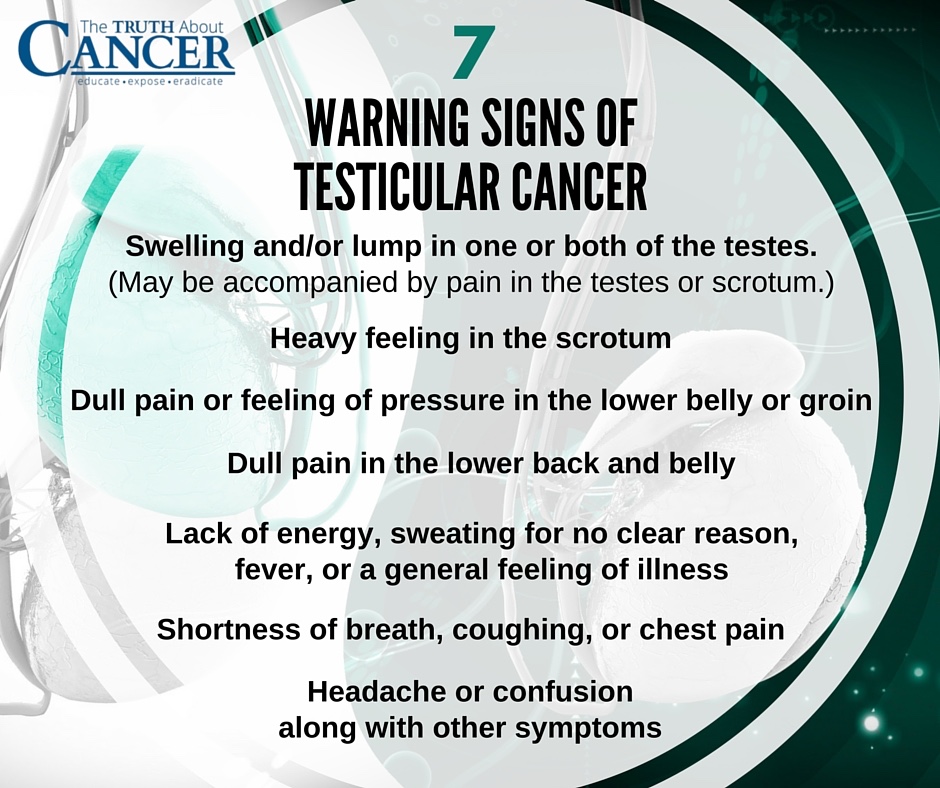
7 Signs of Testicular Cancer
Common signs of testicular cancer include:
- A swelling and/or lump in one or both of the testes. There may or may not be pain in the testes or scrotum
- A heavy feeling in the scrotum
- A dull pain or feeling of pressure in the lower belly or groin
Sometimes these symptoms can be caused by other problems, such as a hydrocele or epididymitis.
Testicular cancer that has spread (metastasized) beyond the testicles and regional lymph nodes to other organs may cause other symptoms depending on the area of the body affected. Symptoms of late-stage testicular cancer may include:
- Dull pain in the lower back and belly
- Lack of energy, sweating for no clear reason, fever, or a general feeling of illness
- Shortness of breath, coughing, or chest pain
- Headache or confusion
Note that not all lumps on the testicles are tumors, and not all tumors are malignant (cancerous). There are many other conditions, such as testicular microlithiasis, epididymal cysts, and appendix testis (hydatid of Morgagni), which may be painful but are non-cancerous.
Testing for Testicular Cancer
A physical examination will typically reveal a firm lump (mass) in one of the testicles. When the health care provider holds a flashlight up to the scrotum, the light does not pass through the lump.
Other tests for testicular cancer include:
- Abdominal and pelvic CT scan
- Blood tests for tumor markers: alpha fetoprotein (AFP), human chorionic gonadotrophin (beta HCG), and lactic dehydrogenase (LDH)
- Chest x-ray
- Ultrasound of the scrotum
Causes of Testicular Cancer
The exact cause of testicular cancer is unknown. Anything that increases your chance of getting testicular cancer is a risk factor. Some of the top risk factors for testicular cancer include:
- Exposure to certain chemical toxins – Toxins are the top root cause of cancer
- Age – Most cases occur between the ages of 15 and 40, and testicular cancer is the type of cancer found most often in men ages 20 to 34
- Race – Caucasian men are 5 to 10 times more likely to develop testicular cancer than men of other races
- Family or personal history of testicular cancer – especially having an identical twin with testicular cancer
- Undescended testicle (cryptorchidism) in infants and young boys – Men with testicles that did not move down into the scrotum before birth are at increased risk. Men who had surgery to correct this condition are still at high risk of testicular cancer
- Abnormal testicular development
- Klinefelter’s syndrome – A sex chromosome disorder characterized by low levels of male hormones, sterility, breast enlargement, and small testes
- Human immunodeficiency virus (HIV) or AIDS
- Previous treatment for testicular cancer
- Viral infections of the testicles, such as occurs with mumps
- Injury to the scrotum
- Activity which may regularly put pressure on or irritate the scrotum (think cyclist Lance Armstrong)
It’s important to note that there is no known link between vasectomy and testicular cancer.
Testicular Cancer Prevention
Like all cancers, there are several steps one can take to help prevent testicular cancer. Such steps include:
- Addressing and eliminating the toxins, which are the root cause of most cancers, from your body and environment
- Building up your vital immune system ? the body’s natural first line of defense against cancer and other illness
- Eating a very healthy, cancer-fighting, and immune boosting diet and avoiding unhealthy foods.
- Including a healthy lifestyle that includes regular exercise or physical activity, stress management, and plenty of regular direct and indirect sunshine
- Making sure that you get daily optimum nutrition through both diet and, as needed, supplementation. Note: Contrary to mainstream medical advice, optimum daily nutrition cannot be obtained from diet alone. As a matter of fact, it is almost impossible to even get minimal RDA amounts of the handful of vitamins and major minerals on the RDA list on a daily basis in a 2,000 to 2,500 calorie per day diet
- Paying special attention to cleansing, restoring, and protecting your vital liver ? the body’s natural toxin removal organ. The great cancer pioneer Max Gerson observed that he never found a single cancer patient who did not also have an impaired liver
- Generally making your body as inhospitable to cancer as possible
Conventional Testicular Cancer Treatment
Mainstream medical treatment of testicular cancer depends on the type of testicular tumor and the stage of the tumor. Unlike other cancers, where sample cells are removed through a technique known as biopsy, doctors use a unique procedure when testicular cancer is suspected. The entire testicle is pulled up out of the scrotum through an incision in the groin and is examined under a microscope. The doctor can then determine if cancer is present, as well as the type of cancer cell ? seminoma or nonseminoma.
After the presence and type of testicular cancer is determined, the next step is to determine how far the cancer has spread. This is called staging.
Stage I cancer has not spread beyond the testicle.
Stage II cancer has spread to lymph nodes in the abdomen.
Stage III cancer has spread beyond the lymph nodes (it could be as far as the liver, lungs, or brain).
Three types of conventional testicular cancer treatment are generally used.
Surgical treatment removes the testicle (orchiectomy), usually as soon as the presence of cancer is determined. Nearby lymph nodes may also be removed via a process known as lymphadenectomy.
Radiation therapy using high-dose x-rays or other high-energy rays may be used after surgery to prevent the tumor from returning. Radiation therapy is usually only used for treating the less common form of testicular cancer, seminomas. Seminomas are very sensitive to radiation therapy.
Chemotherapy uses drugs to kill cancer cells. This treatment has greatly improved survival for patients with both seminomas and nonseminomas. However, like radiation, chemotherapy has side effects which are not only unpleasant but which may lead to further problems, including second cancers, down the road.
Notably, both radiation and many chemotherapy drugs are themselves considered to be carcinogens ? meaning that they can actually cause cancer.
Alternative Treatment for Testicular Cancer
Natural treatment for testicular cancer or any other type of cancer should incorporate all of the things one would usually do for cancer prevention and much more. It requires a comprehensive natural anti-cancer protocol which leaves no stone unturned. After all, even though testicular cancer is highly curable, it can nevertheless be fatal. When your very life is at stake you don’t want to go into the fight with only one or two bullets in your gun.
Take cancer fighting and immune boosting supplements such as oleander extract, turmeric, a potent medicinal mushroom supplement, inositol/IP6, colloidal silver, and more.
To discover more about steps to help ensure victory over cancer (including more detailed information about eliminating toxins and the other steps recommended above), see A Good Cancer-Fighting Foundation Will Ensure Victory Over Cancer.
We rely on health heroes like you to help us spread the word on this important, life saving information. Please share it with friends below.

Article Summary
- Although testicular cancer is considered to be rare, it is the most common cancer in American males between the ages of 15 and 35.
- The good news is that testicular cancer is highly curable through natural alternative means and measures can be taken to help avoid testicular cancer from developing in the first place.
- There are two main types of testicular cancer: seminomas and nonseminomas. These cancers grow from the germ cells that make sperm. A stromal tumor is a rare type of testicular tumor that is usually not cancerous.
- Common signs of testicular cancer include:
- A swelling and/or lump in one or both of the testes (There may or may not be accompanying pain in the testes or scrotum)
- A heavy feeling in the scrotum
- A dull pain or feeling of pressure in the lower belly or groin
- Symptoms of late-stage testicular cancer may include:
- Dull pain in the lower back and belly
- Lack of energy, sweating for no clear reason, fever, or a general feeling of illness
- Shortness of breath, coughing, or chest pain
- Headache or confusion
- Not all lumps on the testicles are tumors, and not all tumors are malignant (cancerous). Tests for testicular cancer include:
- Physical examination
- Abdominal and pelvic CT scan
- Blood tests for tumor markers: alpha fetoprotein (AFP), human chorionic gonadotrophin (beta HCG), and lactic dehydrogenase (LDH)
- Chest x-ray
- Ultrasound of the scrotum
- Like all cancers, there are several steps one can take to help prevent testicular cancer. Such steps include:
- Eliminating toxins from your body and environment
- Building up your vital immune system
- Eating a very healthy, cancer-fighting, and immune boosting diet and avoiding unhealthy foods.
- A healthy lifestyle that includes physical activity, stress management, and regular direct and indirect sunshine
- Getting optimal daily nutrition through both diet and supplementation as needed
- Paying special attention to cleansing, restoring, and protecting your liver
- Making your body as inhospitable to cancer as possible
[+] Sources and References
download now
We made it to Canada!
We made it to Canada!
We made it to Canada last Friday (the 18th) without any problems. I have a wheelchair modified Honda Odyssey with a clear space in the middle (where the 2nd row of seats would normally be). There is a ramp with space for my power chair right behind the front passenger seat. Because its generally safer to have dogs travel in crates, we have Laurels plastic airline-type one on the floor on the other side of the van, behind the drivers seat. We tie it down to the van floor and now we put Hardys crate on top of hers and tie it down to the other crate. It worked really well with the Intermediate size crate for our trip but Im guessing it will be more challenging when we need to use his full-size one.
We have a nice bedroom on the first floor here with a little yard for Laurel and Hardy right outside. Apparently, all the boxes had been in the bedroom but Sue and her husband, John, had cleared them all out before we arrived. So we got all settled and classes began on Sunday. Laurel and I will be taking the Unlimited Levels classes which are based on Sue Ailsbys Training Levels and Hardy and I will take every Puppy class they have. Hardy loves spending time out in the little yard and is getting up very early in the morning so I have been putting him out there and feeding breakfast in various treat toys. For lunch, we do training and I am now cueing each of the behaviors. Were also still working on name recognition and eye contact, as well as going to mat and going into his crate. Then at dinner, we either do more training or I feed him in his crate.
Brent left for home late Sunday morning so that he could get to my parents in time to celebrate Fathers Day. Then Hardy and I attended our first puppy class. I really liked the balance of puppy play, practice of behaviors and time to discuss important puppy things (housebreaking, bite inhibition etc). Even though the class was 1 1/2 hours long, the time flew by and the puppies didnt seem tired or stressed by too much training. One of the puppies spent much of the play time humping Hardy and I have to admit that even though I knew it was normal and didnt mean anything, I wanted to ask John to make the puppy stop. Hardy stood up for himself and made it pretty clear he didnt like the attention. Hopefully, next class the puppy will have gotten the message! Then in the evening, Laurel and I took our first Levels class - Laurel passed Levels 1 and 2 quickly but I realize that each level becomes more demanding and has more and more behaviors that you have to pass. Id love to pass Level 4 before we leave here.
Sue came home with her dogs late that evening and when she took them out of her truck, she realized that her GSD Schutzhund dog, Eco, had bloat. At about 11:00 pm, I raced them to the emergency clinic where they stabilized him and then we raced to the vet school where they did surgery for a twisted stomach (apparently it twisted 360 degrees). Thankfully, he is doing very well and came home a couple days ago. He is on complete crate rest for the next couple weeks at least.
Were settling into a nice routine. Laurel is so good with Hardy - she is very patient and lays down so that he can climb all over her. If he gets out of hand, she lets him know. Theyve also been swimming at Marden Park. Hardy was very funny - he ran right into the water and swam around in a circle, then he got back out and started eating goose poop on the shore. I guess he has his priorities!
Tomorrow Sue and John are having an open house at their training hall, Dogs in the Park. Laurel and I are going to participate in an agility demo and Hardy will get to meet a ton more people and friendly dogs.
download now
Tuesday, September 27, 2016
Let it snow! Let it snow! Let it SNOW!
Let it snow! Let it snow! Let it SNOW!
On December 7th, St. George experienced weather we rarely get. It snowed more than 8 inches that night. It snowed even more the next morning! We were in Vegas for the NFR and they had to close the gorge down because cars were sliding off the road. Luckily, we could stay at my Mom and Dads house. All of St. George was shut down basically for the weekend! It was beautiful and so fun!


download now
Subscribe to:
Posts (Atom)