Showing posts with label oil. Show all posts
Showing posts with label oil. Show all posts
Tuesday, December 20, 2016
Lavender Essential Oil Uses and its benefit for Cancer Patients
Lavender Essential Oil Uses and its benefit for Cancer Patients
Lavender Essential Oil Uses and its Benefits for Cancer Patients
By Marnie Clark
https://thetruthaboutcancer.com/cancer-benefits-lavender-essential-oil/
Total Shares 11.6K
In a hurry? Click here to read the Article Summary...
Very few essential oils evoke the passionate response that people have towards fragrances as lavender essential oil does. People either love it passionately or hate it just as passionately. When the latter group is asked what it is that makes them hate it… usually it has to do with a cranky grandmother who used lavender scent in her underwear drawer!
Love it or hate it, lavender essential oil has more uses and benefits than just about any other essential oil on the planet. This article will focus especially on its uses for cancer patients and provide some helpful tips for using lavender essential oil.
The botanical name of true lavender is Lavandula angustifolia. Although other types of lavender may also have beneficial uses, most of the research is on Lavandula angustifolia and it is the most highly regarded and therapeutic form of lavender.
Historical Use of Lavender Essential Oil
Lavender essential oil holds a special place in the world of herbs and has long been regarded for its wonderful healing properties. Its history goes back some 2,500 years to the ancient Egyptians and Phoenicians who used it for healing, embalming, and perfume. The Romans were known to use lavender for its medicinal and cleansing properties, scenting baths, as an insect repellent, and even for smoking!
During the times of the Black Death in England, lavender was used for protection against the plague. People actually fastened stalks of lavender to their wrists and ankles to protect them against the disease, not understanding the exact reason for that protection. Now we know why it worked… lavender repels the fleas that carried the plague!
In times of war when medicines and antibiotics were not readily available, soldiers were often given lavender oil to ease the pain of injuries and to kill any bacteria in their wounds.
We have now discovered hundreds more uses for lavender. It is known to be calming and relaxing to the nervous system, it eases depression, and improves cognitive performance. Lavender essential oil heals burns, eases allergy symptoms, kills bacteria, neutralizes the itch of insect bites, is a natural antiseptic and antifungal, and so much more.
One of the most interesting aspects of lavender essential oil, however, is how it helps cancer patients.
The 4 Best Benefits of Lavender Essential Oil for Cancer Patients
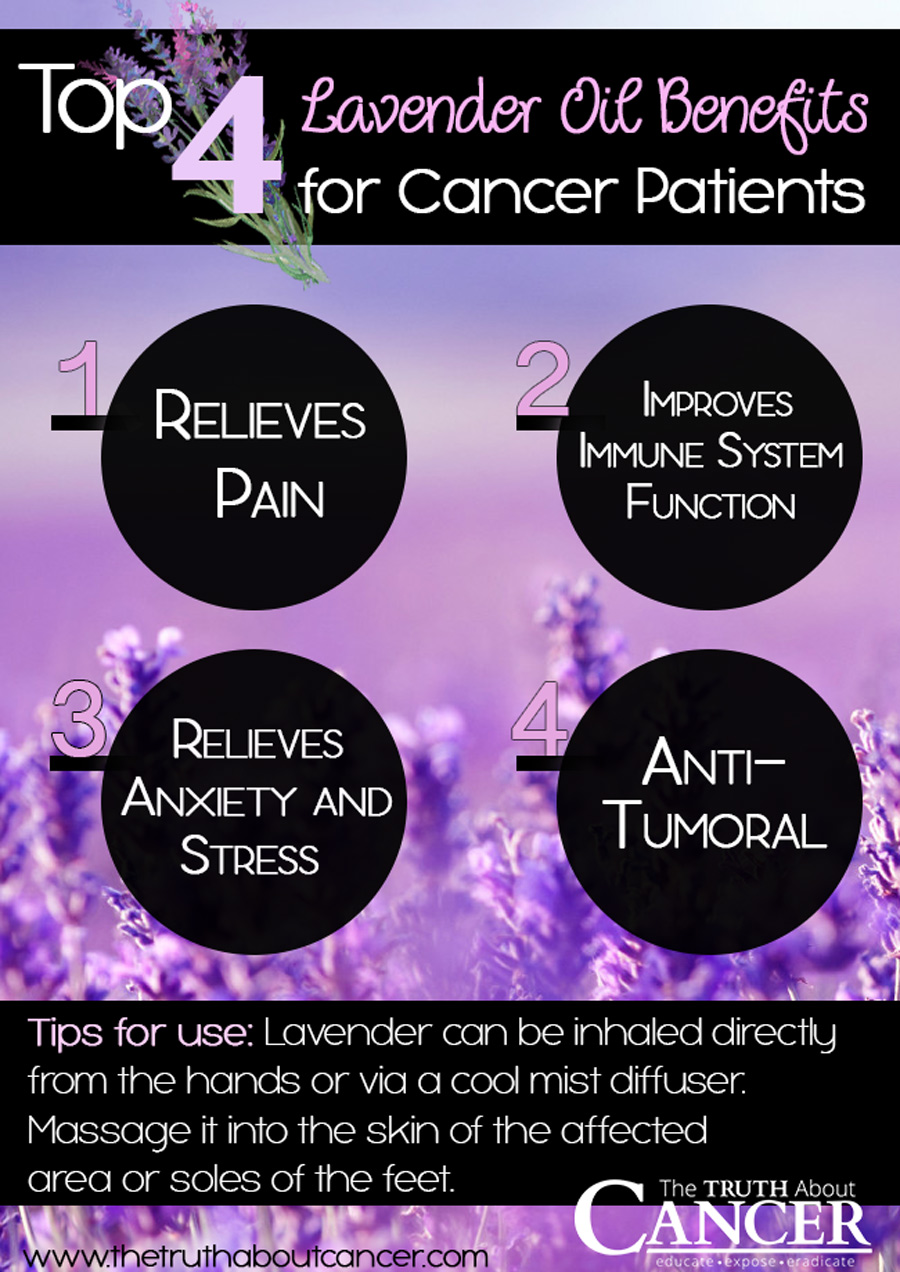
1. As an anti-tumoral. One of the active phytochemicals (plant chemicals) within lavender is perillyl alcohol. In 2015, researchers found that perillyl alcohol administered via nasal inhalation was an effective treatment for glioblastoma patients. These patients had become unresponsive to standard cancer therapies and faced a “dismal prognosis.” The study indicated that long-term inhalation of perillyl alcohol was very well tolerated over several years of daily use. (Several years means the patients lived much longer than expected!)
Another phytochemical within lavender is linalool. Recent (2016) research on linalool indicated it has “significant” cytotoxic (cancer cell killing) and apoptotic (programmed cell death) activity against epithelial ovarian cancer cells. In addition, researchers found that combining linalool with paclitaxel significantly decreased tumor weight, compared with the use of paclitaxel alone.
2015 research on linalool against human melanoma cells revealed that linalool had an inhibitory effect on the growth of these cells.
A 2014 study demonstrated that Lavandula angustifolia essential oil exhibited significant cytotoxic effects against malignant cervical cancer cells. It had the same effect on both estrogen- and progesterone-receptor positive breast cancer cells.
In another study from 2013, researchers found that Lavandula angustifolia decreased the viability of Hodgkin’s lymphoma cells. Lavender inhibited cell proliferation (rapid growth) and induced apoptosis (programmed cell death, lacking in cancer cells).
Tips for use: Using a therapeutic grade lavender oil, massage oil directly into affected areas. Used transdermally (through the skin), essential oils are absorbed into the bloodstream within about 20 minutes. Lavender essential oil can also be diffused into the room using a cool mist diffuser. Never heat essential oils as it ruins their therapeutic properties.
2. Relief of anxiety and stress. Lavender is excellent for its ability to calm the nervous system and ease stress and anxiety. It also helps improve the quality and depth of sleep. A 2009 study confirmed lavender’s ability to improve mood, and to reduce anxiety and depression.
Tips for use: Drip a few drops of lavender oil into your hands, rub hands together, and deeply inhale the scent for a minute or two to enjoy its calming effects. Lavender oil can also be diffused into the room using a cool mist diffuser. It can be applied to the soles of the feet prior to retiring to bed for the night. A drop or two of lavender oil can be applied directly on the pillow.
3. Improvement of immune system function. Studies show that the anti-bacterial effects of Lavandula angustifolia help to protect the immuno-compromised cancer patient from opportunistic bugs, even the dreaded Staphylococcus aureus, or golden staph. It influences the body’s macrophages and phagocytes, part of the immune system, and influences genetic activity to help fight the infection.
Tips for use: Massage lavender oil into the skin, making sure to use a therapeutic or medicinal grade of oil. The soles of the feet have the largest pores of the body, so this is a good place to apply essential oils, especially before going to bed at night. Lavender oil can also be diffused via a cool mist diffuser into the room where you work or study.
4. Pain relief. Lavender has long been used for pain relief. A small 2007 study using lavender examined the pain medication requirements of 54 patients undergoing laparoscopic gastric banding. Eighty-two percent receiving just a placebo required pain medication. Only 46% of those who received lavender by inhalation required pain medication. Also, significantly less pain medication was required by those receiving lavender as compared with a placebo.
Tips for use: Lavender can be inhaled directly from the hands or via a cool mist diffuser. Massage it into the skin of the affected area or soles of the feet.
Precautions When Using Lavender Essential Oil
1. Make sure your lavender essential oil is derived from true lavender, Lavandula angustifolia, and not lavandin. Lavandin is often substituted by makers of cheaper essential oils because it yields more oil than true lavender. Lavandin is not a legitimate substitute for Lavandula angustifolia as it does not possess the same healing properties and should never be used on burns.
2. The use of lavender may increase or potentiate both the narcotic and sedative effects of other drugs because of its calming effect on the central nervous system.
3. Be cautious about using lavender together with anticoagulant drugs because the combination may increase the risk of bleeding.
4. Never apply essential oils anywhere near the eyes or inside the ears.
5. It is not recommended to use essential oils as a sole treatment for cancer. But used in combination with other therapies (both conventional and alternative), essential oils can play a huge role in helping a person to heal.
Live your life without the threat of cancer. Go here to be notified each week about new, cutting-edge information that impacts your health.

Article Summary
- Whether you love or hate the scent, lavender essential oil has more uses and benefits than just about any other essential oil on the planet.
- Although other types of lavender may also have beneficial uses, most of the research is on Lavandula angustifolia and it is the most highly regarded and therapeutic form of lavender.
- Lavender essential oil holds a special place in the world of herbs and has long been regarded for its wonderful healing properties. It is used to heal burns, ease allergy symptoms, kill bacteria, neutralize the itch of insect bites, is a natural antiseptic and antifungal, and so much more.
- The 4 Best Benefits of Lavender Essential Oil for Cancer Patients include:
- As an anti-tumoral
- Relief of anxiety and stress
- Improvement of immune system function
- Pain relief
- There are several precautions that should be followed when using lavender essential oil:
- Make sure your lavender essential oil is derived from true lavender, Lavandula angustifolia, and not lavandin.
- The use of lavender may potentiate (increase) both the narcotic and sedative effects of other drugs because of its calming effect on the central nervous system.
- Be cautious about using lavender together with anticoagulant drugs because the combination may increase the risk of bleeding.
- Never apply essential oils anywhere near the eyes or inside the ears.
- It is not recommended to use essential oils as a sole treatment for cancer. In combination with other therapies essential oils can play a huge role in helping a person to heal.
[+] Sources and References
If you liked this article, get more articles and news like it by simply subscribing now for FREE:
If Cancer Scares You, Do Not Miss This...
See the Truth About Cancer here.
Over 20,000 people die each day from cancer. So if it scares you, that’s understandable.
However… whether you’re trying to avoid cancer or beat it if you’ve got it, there is one very powerful antidote to the fear, and to the disease itself: knowledge.
In “The Truth About Cancer: A Global Quest” you’ll discover the most powerful ways to prevent, treat, heal from, and beat the disease. Though you haven’t heard of most of these ways, you deserve to, so…
Click here now to conquer the fear, and find out what you really need to know.
?
Previous
This Popular Breast Cancer Drug is a Known Carcinogen (video)
?
Next
Cancer Fighting Recipe: Broccoli Sprouts Dip with Hemp Seed Oil
About Marnie Clark
Marnie Clark has been passionately studying natural medicine since 1995. She is a breast cancer coach, bodyworker, mother of one, grandmother of two, and is married to a wonderful man. In her “previous life” she was a legal secretary; a stressful job if there ever was one. Marnie’s driving force is to teach women patient empowerment and how to thrive during and after breast cancer. Her website is MarnieClark.com.
download now

Thursday, November 24, 2016
How I Recovered From A Head Injury With The Help Of Cannabis Oil
How I Recovered From A Head Injury With The Help Of Cannabis Oil
How I Recovered From A Head Injury With The Help Of Cannabis Oil
/.txt
Via: Iriana Shiyan | Shutterstock
/.article-banner
AddThis Button END
/.utilities
by Liz Purcell
ON JANUARY 5, 2016
In January 2013, I was a junior in college in the journalism program at a state school in the U.S. I wrote for the school newspaper as an editor and a writer, I had tons of friends and acquaintances and I felt on top of the world. On this particularly boring day, I went for a quick jog around campus about 3 PM. It was unusually warm outside. I arrived at my dorm and I decided to rearrange my furniture before the new semester began.
I tore the crammed room apart with ease, pushing around beds and desks, cleaning off shelves and moving junk around. In my usual grace, I knocked over a huge cup of water and it splashed all over my desk, my papers, on the floor, just everywhere. I grabbed a towel quickly and began cleaning up the water on the floor. Then, as if planted from some other dimension, my fifteen-pound box of paint and art supplies fell about 10 feet and hit me firmly on the back of the head. My life would never be the same again.
Fifteen pounds seems minuscule compared to some head injury war stories I’ve read (have you seen the guy who survived a railroad spike that literally shot through his brain?) but it was enough — enough to force me to drop out of school because I couldn’t concentrate or remember new information, enough to confine me to bed rest for over 6 months because I could not read, write, exercise, have conversation or drive. It was enough to ruin almost all of my relationships because of my inability to act and react like the ‘old me.’ My personality did a 180 and I became extremely depressed, with mood cycles mimicking bipolar disorder. I wore ear plugs and sunglasses constantly because light was too bright and sound was too loud.
In short, my life became a complete nightmare overnight and I had no idea what to do about it. Unfortunately, neither did anyone else. I sought treatment from some of the most highly accredited neurologists in the country. The only advice they had for me was to rest and they readily prescribed me addictive, harmful medications to minimize the symptoms. After about six months, my symptoms improved enough to leave the house so I decided to try to go back to school. I failed all of my classes and no one seemed to understand. My thoughts always felt jumbled — I could not write papers or retain information being taught in class. I was addicted to prescription pills and I felt lower than I had ever felt in my life.
Then, a miracle happened. I was preparing to leave school for good when I met someone who changed my life forever. They had cannabis oil and they wanted to ‘treat’ me for free because they understood what I was going through.
New Year’s Eve was the first night I tried the oil. I took about three drops and I was higher than I had ever been in my entire life. When I woke up the next day, for the first time in nearly two years since my accident, my depression has completely lifted. I felt happy, stronger, better. I began taking the oil everyday. My body adjusted to the oil quickly so I no longer felt impaired by it. In less than three months of taking the oil, I had stopped taking ALL of my medications. My depression, anxiety, and PTSD faded almost completely and my brain quickly began to return back to normal. I started to read articles, then short stories, then entire books! I regained my ability to write and organize my thoughts. I could drive again and my memory improved everyday.
I was amazed, shocked — angry, even. How could such a simple, yet powerful, solution have been hidden from me and from the thousands of others who have injuries similar to mine? Yet here I was — happy, healing, and grateful to have encountered the beautiful herb, after only 8 weeks of cannabis oil therapy.
It’s been about a year and I still use cannabis oil everyday. I still have mood cycles but the oil completely regulates them and I can function wonderfully in the world.
I have felt very different since the injury (who wouldn’t?), but I believe and know marijuana has healed the remainder of the damage in my brain. Marijuana has also helped me see how my experience was profoundly positive in the end. Taking cannabis oil has instilled a deeply spiritual feeling within myself I cannot shake, nor would I want to.
I feel compelled to share my story with anyone who will listen. Cannabis oil has saved my life physically, mentally, emotionally, and spiritually. This is so much more than a drug to get high off of. Marijuana is a medicine with the power to heal.
This story has been edited lightly for typos and clarity.
download now
Sunday, November 6, 2016
Frankincense Oil
Frankincense Oil
Frankincense Oil: The King of Oils
June 02, 2016 | 1,355,328 views
Frankincense has a significant meaning in Christianity, and is believed to be one of the gifts offered by the three wise men to the newborn Jesus.
Today, this fragrant resin is transformed into an essential oil thats valued not only in religious practice, but also in aromatherapy and natural health. Read on to learn more about frankincense oil.
What Is Frankincense Oil?
Frankincense, also known as olibanum,1 comes from the Boswellia genustrees, particularly Boswellia sacra and Boswellia carteri. The milky white sap is extracted from the tree bark, allowed to harden into a gum resin for several days, and then scraped off in tear-shaped droplets.2
Boswellia trees grow in African and Arabian regions, including Yemen, Oman, Somalia, and Ethiopia.3 Oman is the best known and most ancient source of frankincense, where its been traded and shipped to other places like the Mediterranean, India, and China for thousands of years.4
The highest-quality frankincense is clear and silvery, but with a slight green tinge. Brown-yellow varieties are the cheapest and most readily available. In Oman, the best frankincense is usually reserved for the sultan and is rarely shipped out of the country.5
Frankincense is traditionally burned as incense, and was charred and ground into a powder to produce the heavy kohl eyeliner used by Egyptian women. Today, this resin is steam-distilled to produce an aromatic essential oil with many benefits.
Frankincense oil has a woody, earthy, spicy, and slightly fruity aroma, which is calming and relaxing. Its said to be sweeter, fresher, and cleaner than frankincense resin.6
Uses of Frankincense Oil
Frankincense oil has long been revered in the Middle East, where its been used in religious ceremonies as an anointing oil for thousands of years. It is also a popular ingredient in cosmetics, and has even been found in the remains of Anglo-Saxons and ancient Egyptians.7
I believe that frankincense oil is one of the top essential oils you can use for your health. Its known for its comforting properties, and is useful for visualizing, improving ones spiritual connection, and helping overcome stress and despair.8
In aromatherapy, frankincense oil is either inhaled or diffused via a vaporizer – a very effective sedative that induces a feeling of mental peace, relaxation, and satisfaction, and helps relieve anxiety, anger, and stress.9
Frankincense oil promotes healthy cell regeneration and keeps existing cells and tissues healthy. Its useful for skin health, and can help treat dry skin, reverse signs of aging, and reduce the appearance of stretch marks and scars.10 Frankincense oils astringent properties help:11
- Strengthen gums and hair roots
- Stop wounds from bleeding
- Speed up the healing of cuts, acne, insect bites, and boils
Composition of Frankincense Oil
The main components of frankincense oil are ketonic alcohol (olibanol), resinous matters (30 to 60 percent) and terpenes such as a-and p-pinene, camphene, dipentene, and phellandrene.12 It also contains alpha pinene, actanol, bornyl acetate, linalool, octyl acetate, incensole, and incensyl acetate.13
The monoterpenes and sesquiterpenes are the most valuable elements of frankincense oil. According to the book, "Reference Guide for Essential Oils," by Connie and Alan Higley, monoterpenes help prevent and discharge toxins from your liver and kidneys, and have antiseptic, antibacterial, stimulating, analgesic (weak), and expectorant properties.14
Meanwhile, sesquiterpenes can go beyond the blood-brain barrier and simulate the limbic system of your brain, as well as your hypothalamus, and pineal and pituitary glands.15
Benefits of Frankincense Oil
The health benefits of frankincense oil are mostly attributed to its anti-inflammatory, astringent, antiseptic, disinfectant, digestive, diuretic, and expectorant properties. It also has cicatrisant, carminative, cytophylactic, emenagogue, uterine, and vulnerary effects.
Frankincense oil is considered a tonic, as it benefits all the systems operating in the body, including the digestive, respiratory, nervous, and excretory systems. It also aids the absorption of nutrients and strengthens your immune system.16 Frankincense oil has been found useful for certain health conditions, such as:
• Arthritis and rheumatoid arthritis (RA) — Research by Cardiff University scientists found that frankincense can inhibit the production of key inflammatory molecules, helping prevent the breakdown of the cartilage tissue that causes these conditions.17
In addition, Indian frankincense or boswellin, also a member of the Boswellia genus, has been found to significantly reduce inflammation in animal studies. It is actually one of my personal favorites, as I have seen it work well as a natural painkiller for many of my former rheumatoid arthritis (RA) patients.
• Colds and respiratory disorders — Frankincense oil can break up phlegm deposits in your respiratory tract and lungs, and can relieve bronchitis-related congestion.18
• Oral health problems — The antiseptic qualities of this oil can help prevent bad breath, cavities, toothaches, mouth sores, and other infections.19
• Digestive disorders — Frankincense oil speeds up the secretion of gastric juices, bile, and acids, and stimulates peristaltic motion to allow food to move properly through your intestines.20
• Uterine health — Frankincense oil regulates estrogen production in women and reduces the risk of post-menopause tumor or cyst formation in the uterus (uterine cancer). It also regulates the menstrual cycle of premenopausal women.21
Frankincense is also being studied for its potential to treat cancer. Scientists have observed that theres an agent in this oil that may help stop cancer from spreading.22
How to Make Frankincense Oil
Frankincense oil is made by steam-distilling the raw resin. When buying frankincense oil, make sure that you only choose 100 percent pure essential oil of the highest quality.
Also, do not confuse frankincense essential oil with fragrance oil. Essential oils come from plants, while fragrance oils are usually artificially created and often contain synthetic chemicals. Although they smell good and are typically less expensive, fragrance oils do not give you the therapeutic benefits of organic essential oils.23
How Does Frankincense Oil Work?
The effects and benefits of frankincense oil can be acquired by applying it topically, inhaling it using a diffuser or vaporizer, or ingesting it in very small amounts.24 For pain relief, simply massage the oil onto the affected areas. Meanwhile, using a diffuser or inhaler works for treating colds and clearing up respiratory blockages. You can also sprinkle a few drops on a clean cloth and inhale the scent, or add it to your bathwater for a rejuvenating soak.25
Frankincense oil can be directly applied to the skin or blended with other carrier oils such as jojoba, sweet almond, avocado, patchouli, rosemary, clary sage, citrus, and basil oils.
Is Frankincense Oil Safe?
Yes, frankincense is generally safe. However, I advise doing a spot test first, to check if you have any sensitivity to this oil. When taking frankincense oil internally, its best to dilute a drop in an edible carrier oil (like coconut oil), a teaspoon of honey, or a glass of purified water or any non-acidic, non-dairy beverage.26 You can also put a drop or two under your tongue.27 However, ingesting this oil is not recommended for children ages 6 and below. Older children and teens may also require higher dilutions.
You must also remember that not all frankincense oil brands are made for internal use, so make sure you check the label before taking it.
Side Effects of Frankincense Oil
There are no reported severe side effects of using this oil.28 However, in some rare cases, frankincense oil can cause skin rashes, gastrointestinal distress, such as nausea, stomach pain, and hyperacidity. It also has blood thinning effects, and may increase the risk of abnormal bleeding in people with a bleeding disorder or taking anticoagulant medications.29
Frankincense essential oil is also not recommended for pregnant women and nursing moms, as it acts as an emenagogue and may induce menstruation, which may be dangerous for an unborn fetus.30
download now
Sunday, October 23, 2016
Monday, October 10, 2016
Ulta Dual Cleansing Brush and Coconut Oil FTW
Ulta Dual Cleansing Brush and Coconut Oil FTW
A few days ago, I posted about my haul from Ulta, Target, CVS and Rite Aid. Ive had a chance to really use some of the products and there are some major surprises and upsets! One thing that I was really hoping would work was the Ulta Dual Cleansing Brush. Its an affordable knock-off of the Clarsonic Facial Cleansing Brush and I had high hopes. I bought the Ulta version for $17.50. The Clarsonic version is about $125. That is a huge difference, people.
Ive been having some major skin issues. I have always had combination skin. My cheeks are always dry but my nose, forehead and chin are an oily, crazy mess. However, around my nostrils, it is always dry and flaky. I dont understand that at ALL. There is enough oil on my nose to go around for everyone and yet? Flaky skin. Can anyone clue me in on this?
Anyways, after having Shepherd, I feel like my dry skin got dryer and my oily skin got oily. It bugs. I need an easy way to exfoliate my skin regularly that wont hurt my sensitive skin. Enter the Ulta face brush. Ive only used it twice but the second time wowed me enough to want to share it with you.

I dont have detailed photos of the attachments to the brush, but the one on the top is a sponge instead of a brush. The box says you can use it to deepen your application of moisturizer. I took a shower last night and noticed that I had really bad dry, red patches on both cheeks in the same place, probably from wind or something.
So I grabbed Philosophys Take A Breath moisturizer and patted it on, grabbed my coconut oil and patted that on. The coconut oil acts as a seal for the moisturizer. I notice a huge difference when I used the moisturizer alone and when I put coconut oil on top. I grabbed the sponge attachment, wet it with warm water and used it to buff that oil into my skin.
I woke up today and washed my face of the oil and put on moisturizer before following my normal make-up routine. My skin felt glorious. Soft and smooth! Obviously, itll take a few times of repeating these steps to really clear those red areas, but I am pleased with the results from only one usage!
I used the brush once as well and I dont have enough data to know if in the long run it will help or hurt my skin. Im gonna wait and see how it goes.
Do you have a brush? If so, do you use it every night to clean your face or is it more like every few nights? Any tips you have for a newbie?
download now
Friday, September 23, 2016
Monday, September 12, 2016
Benefits of Bergamot Oil Mercola
Benefits of Bergamot Oil Mercola
The Blissful Benefits of Bergamot Oil
May 19, 2016 | 164,986 views
More than just offering a familiar scent or flavor, bergamot oil is bursting with a powerhouse of benefits. Find out how this sweet-smelling essential oil can work wonders for your health.
What Is Bergamot Oil?
Bergamot essential oil is made from the hand- or cold-pressed rind of a nearly ripe fruit of the bergamot tree, also known as the Citrus bergamia from the Rutaceae family. The bergamot orange tree is the result of the cross-breeding of the lemon tree and the orange tree,1 which explains its pear-like shape and yellow color.2
Fun fact: 100 bergamot oranges will yield only about 3 ounces or 85 grams of bergamot oil.
Although its roots can be traced back to South East Asia, bergamot was more widely cultivated in Southern Italy, specifically in the coastal regions of Reggio di Calabria and Sicily.
As a matter of fact, bergamot essential oil was named after the city of Bergamo in Lombardy, Italy, where it was originally sold. Bergamot is also produced in the Ivory Coast, Argentina, Morocco, Turkey, and Brazil.
Uses of Bergamot Oil
I highly recommend using bergamot essential oil as a natural mosquito repellant, insect-bite salve, deodorant, inhalant, and relaxing massage oil.3 Below are some of its other practical uses:
• Sweet and citrus scent – Because of its unique fruity and subtly spicy aroma, bergamot oil is frequently added to different perfume and cosmetic products. Bergamot oil is a major ingredient in the original 4711 Eau De Cologne by Johann Maria Farina at the beginning of 18th-century Germany.
Bergamot oil blends perfectly well with other essential oils such as cedarwood, citronella, clary sage, geranium, ho leaf, neroli, lavender, lemon, palmarosa, rosewood, tangerine, and ylang-ylang.
• Fruity flavoring – If Italians have bergamot marmalade, people in Sweden and Norway enjoy bergamot-flavored snus, a smokeless, sugar-free tobacco from the 18th century.4 It is also used as the distinct flavoring in Earl Grey and Lady Grey teas, and in delectable confectionaries such as the Turkish Delight.
• Pest repellant – To shield crops from being attacked by pests, bergamot plant, whose roots have a potent odor, is grown as a companion crop on vegetable gardens.
Composition of Bergamot Oil
Bergamot essential oil is light yellow-green in color. Its active chemical components include a-pinene, myrcene, limonene, a-bergaptene, b-bisabolene, linalool, linalyl acetate, nerol, neryl acetate, geraniol, geraniol acetate, and a-terpineol.
Melitidin and brutieridin, which studies show exhibit statin-like properties, is only found in citrus bergamot.5
Benefits of Bergamot Oil
Bergamot oil boasts of powerful antibacterial, analgesic, antiseptic, antispasmodic, and soothing effects. Back in the day, Italians used bergamot oil in folk medicine to cool fevers and expel intestinal worms.
The juice of the bergamot fruit, on the other hand, was used in Calabrian indigenous medicine to treat and malaria.6 In addition, bergamot essential oil:
• Alleviates symptoms and complications of bacterial infections7 – According to a study published in the April 2009 issue of the Journal of Applied Microbiology, bergamot oil can produce positive results against Enterococcus faecium and Enterococcus faecalis bacteria that are resistant to the potent antibiotic vancomycin.
These enterococcal species are a common source of a variety of infections, including urinary tract infections (UTI), bacteremia, endocarditis, and meningitis. Just add bergamot oil to your sitz bath or hip bath to help prevent the spread of bacterial infections from the urethra into the bladder.
• Acts as a substitute for statins8 – A newly published research in the Journal of Natural Products revealed that citrus bergamot has statin-like principles and carries the 3-hydroxy-3-methylglutaric acid (HMG) moiety.
Today, 1 in 4 Americans over age 45 now takes cholesterol-lowering drugs known as statins, typically for the primary prevention of heart attacks and strokes.
If youll ask me, not only is their benefit highly limited to those with a genetic condition, but these drugs come with an avalanche of potential side effects, too. Check out my article "Side Effects of Statins."
Keep in mind: there are far better ways to prevent heart disease than taking statins or unnecessarily lowering your cholesterol, including eating right, exercising, and maintaining healthy vitamin D levels.
• Speeds up the healing process for cold sores, mouth ulcers, and herpes9 – Bergamot oil has a similar antibacterial effect on shingles and chickenpox, which are also caused by the varicella zoster virus from herpes. Apply bergamot essential oil topically on affected area until condition improves.
• Prevents and improves skin conditions from fungal infections10 – In a study published in the Journal of Antimicrobial Chemotherapy, Italian researchers have proven bergamot essential oils amazing antifungal properties when used as a topical remedy for infections brought by candida fungus strains.
• Reduces anxiety and stress11 – Experts say that when used in aromatherapy preparations, bergamot oil can lessen stress and anxiety levels of patients prior to surgery. It also relieves depression and eliminates chronic fatigue syndrome. Learn how aromatherapy can resolve your anxiety issues.
How to Make Bergamot Oil
There are two main methods to obtain citrus essential oils like tangerine, lemon, and bergamot:12
1. Expression or cold-pressing – In the early days, expression is done by manually pressing the rind or the fruit peelings until the oil comes out of it.
A more modern and less labor-intensive version of this is called the écuelle à piquer, which is basically the same process but features a mechanical device that uses centrifugal force.
2. Distillation – This process involves either water or steam. Due to contact with water, the aroma of distilled bergamot essential oil is diminished, and is therefore considered of lower quality compared to the expressed variety.
Currently, the bergamot essential oil produced in Reggio Calabria, Italy, ranks as the highest in quality in the international trading market.13
How Does Bergamot Oil Work?
Bergamot oil has a number of beneficial active chemicals in it, which is why it can be used effectively for different conditions in a variety of ways. Bergamot essential oil can be:14
- Added to water for an aromatic bath to help reduce stress
- Inhaled for an instant boost of positivity
- Applied topically to soothe insect bites
- Used with chamomile and fennel essential oil to massage your abdominal area for treatment of gas, indigestion, and flatulence
- Mixed with lavender, salt, and filtered water as a genital wash to prevent UTI recurrence
Is Bergamot Oil Safe?
The use of bergamot oil is generally safe. But I still encourage you to err on the side of caution at all times. Always consult your physician before adding anything to your treatment plan. Due to its potential health risks, I discourage either topical or internal administration of bergamot oil to pregnant or nursing women and very young children.
Taking bergamot oil orally is also not advisable for individuals with existing potassium deficiency, as it is known to deplete potassium stores in the body and cause muscle cramps and twitching.
Since bergamot oil can heighten your vulnerability to sun damage, never use it with photosensitizing drugs like Ciprofloxacin (Cipro), norfloxacin (Noroxin), lomefloxacin (Maxaquin), ofloxacin (Floxin), and levofloxacin (Levaquin), to name a few, as doing so may cause serious adverse reactions.
Side Effects of Bergamot Oil
Im a strong advocate of safe sun exposure. But perhaps one of the very few moments when Ill advise against basking under the sun is after youve applied bergamot oil on your skin. Due to its bergamottin and bergapten content, which absorbs ultraviolet light, bergamot oil may induce photosensitivity (oversensitivity to the sun) and may lead to extreme sunburn and other complications.
The same warning goes to all essential oils derived from citrus fruits like lime, orange, and lemon. To avoid this from happening, wait for up to 72 hours after topical application before heading outdoors. According to studies, bergamot essential oil has antimicrobial and antifungal properties, which may make it beneficial for a wide array of skin disorders.
However, it may not be true for everybody. An eMedTV article reports that bergamot oil can cause skin irritation to some people, which manifests through blisters, scabs, redness, and changes in skin pigmentation.15 Before using bergamot essential oil as an all-natural skincare treatment, performing a 24-hour skin test on a small area of your skin would be a very logical step to do first.
download now
Friday, August 12, 2016
9 Types of Cancer that can be killed by Cannabis Oil
9 Types of Cancer that can be killed by Cannabis Oil
May 25, 2016 Cannabis Oil
9 TYPES OF CANCER THAT CAN BE KILLED BY CANNABIS (HERE’S HOW)
Cannabis, also known as marijuana, is a plant grown in many parts of the world, and has been used for medicinal purposes dating back to ancient times. It produces a resin containing compounds called cannabinoids. These Cannabinoids are active chemicals in Cannabis that cause drug like effects throughout the body, including the central nervous system and the immune system. Some of these cannabinoids are psychoactive and act on the brain by changing mood or consciousness. Cannabinoids can be taken by mouth, inhaled, or sprayed under the tongue.
Studies of The Therapeutic Properties Of Cannabis
Cannabis and cannabinoids have been studied in the laboratory and the clinic for relief of pain, nausea and vomiting, anxiety, and loss of appetite. Two cannabinoids (dronabinol and nabilone) are drugs approved by the U.S. Food and Drug Administration (FDA) for the prevention or treatment of chemotherapy related nausea and vomiting.
However, the therapeutic potential of cannabis almost appears limitless, as it extends far beyond just relieving nausea or pain in the terminally ill. Christina Sanchez, a molecular biologist from Compultense University in Madrid, Spain, has been studying the molecular activity of cannabinoids for more than 10 years, and during this time she and her colleagues have learned that tetrahydrocannabinol, or THC, the primary psychoactive component of cannabis, induces tumor cell “suicide” while leaving healthy cells alone.
This discovery was pretty unexpected, as Sanchez and her team had actually been studying brain cancer cells for the purpose of better understanding how they function. During this process, they observed that when exposed to THC, tumoral cells not only ceased to multiply and proliferate but destroyed themselves, both in lab tests and animal trials. This was first reported on back in 1998, and published in a paper on the anti-cancer effects of THC in the European biochemistry journalFEBS Letters.
The Human Body is Designed to Utilize Cannabis Compounds
Research in the 1980s revealed that the human body contains two specific targets for THC. There is a framework known as the endocannabinoid system, that processes THC and other cannabinoids, along with containing various cannabinoid receptors throughout the body that utilize them. Together, these two natural systems allow the body to benefit from the cannabinoids found in cannabis, some of which aren’t found anywhere else in nature. The endocannabinoid system regulates a lot of biological functions: appetite, food intake, motor behavior, reproduction, and many, many other functions. And that’s why the plant has such a wide therapeutic potential.
Studies in mice and rats have shown that cannabinoids help to inhibit tumor growth by causing cell death, blocking cell growth, and the development of blood vessels needed by tumors to grow larger. Laboratory and animal studies have gone on to show that cannabinoids can kill cancer cells while protecting normal cells.
Brain Cancer Benefits
- A study published in the journal Molecular Cancer Therapeutics outlines how brain tumors are highly resistant to current anticancer treatments, which makes it crucial to find new therapeutic strategies aimed at improving the poor prognosis of patients suffering from this disease.
- A study published in the British Journal of Cancer, conducted by the Department of Biochemistry and Molecular Biology at Complutense University in Madrid, determined that THC and other cannabinoids inhibit tumor growth. THC was found to decrease tumour cells in two out of the nine patients, and the delivery was safe and was achieved with zero psychoactive effects.
- A study published in The Journal of Neuroscience examined the biochemical events in both acute neuronal damage and in slowly progressive, neurodegenerative diseases. They looked at THC and found that it reduced neuronal injury in rats, and provide evidence that the cannabinoid system can protect the brain against neurodegeneration.
- A study published in The Journal of Pharmacology And Experimental Therapeutics already acknowledged the fact that cannabinoids have been shown to possess antitumor properties. This study examined the effect of cannabidiol (non psychoactive cannabinoid compound) on human glioma cell lines (Glioma is the word used to describe brain tumor). The addition of cannabidiol led to a dramatic drop in the viability of glioma cells, the study concluded that cannabidiol was able to produce a significant antitumor activity.
Breast Cancer Benefits
- A study published in the US National Library of Medicine, conducted by the California Pacific Medical Centre determined that cannabidiol (CBD) inhibits human breast cancer cell proliferation and invasion. They also demonstrated that CBD significantly reduces tumor mass.
- A study published in The Journal of Pharmacology and Experimental Therapeutics determined that THC as well as cannabidiol dramatically reduced breast cancer cell growth.
- A study published in the Journal Molecular Cancer showed that THC reduced tumor growth and tumor numbers. They determined that cannabinoids inhibit cancer cell proliferation, induce cancer cell apoptosis and impair tumor angiogenesis (the creation of new blood vessels), providing strong evidence for the use of cannabinoid based therapies for the management of breast cancer.
- A study published in the Proceedings of the National Academy of Sciences of the United States of America (PNAS) determined that cannabinoids inhibit human breast cancer cell proliferation.
Lung Cancer Benefits
- A study published in the journal Oncogene, by Harvard Medical Schools Experimental Medicine Department determined that THC inhibits epithelial growth factor induced lung cancer cell migration and more. They go on to state that THC should be explored as novel therapeutic molecules in controlling the growth and metastasis of certain lung cancers.
- A study published by the US National Library of Medicine, conducted by Harvard Medical School investigated the role of cannabinoid receptors in lung cancer cells. They determined its effectiveness and suggested that it should be used for treatment against lung cancer cells.
- A study published by the US National Library of Medicine by the Institute of Toxicology and Pharmacology, from the Department of General Surgery in Germany determined that cannabinoids inhibit cancer cell invasion. Effects were confirmed in primary tumor cells from a lung cancer patient. Overall, data indicated that cannabinoids decrease cancer cell invasiveness.
Prostate Cancer Benefits
- A study published in the US National Library of Medicine outlined multiple studies proving the effectiveness of cannabis on prostate cancer.
- A study published in the US National Library of Medicine illustrates a decrease in prostatic cancer cells by acting through cannabinoid receptors.
- Another study published by the US National Library of Medicine determined that clinical testing of CBD against prostate carcinoma is a must, as cannabinoid receptor activation induces prostate carcinoma cell apoptosis (cell death).
Blood Cancer Benefits
- A study published in the US National Library of Medicine conducted by the Department of Pharmacology and Toxicology by Virginia Commonwealth University determined that cannabinoids induce apoptosis in leukemia cells.
- A study published in the journal Molecular Pharmacology recently showed that cannabinoids induce growth inhibition and apoptosis in mantle cell lymphoma. The study was supported by grants from the Swedish Cancer Society, The Swedish Research Council and the Cancer Society in Stockholm.
- A study published in the International Journal of Cancer also determined and illustrated that cannabinoids exert antiproliferative and proapoptotic effects in various types of cancer and in mantle cell lymphoma.
Liver Cancer Benefits
- A study published by the US National Library of Medicine determined that that THC reduces the viability of human HCC cell lines (Human hepatocellular liver carcinoma cell line) and reduced the growth.
Pancreatic Cancer Benefits
- A study published in The American Journal of Cancer determined that cannabinoid receptors are expressed in human pancreatic tumor cell lines and tumor biopsies at much higher levels than in normal pancreatic tissue. Results showed that cannabinoid administration induced apoptosis. They also reduced the growth of tumor cells, and inhibited the spreading of pancreatic tumor cells.
Oral Cancer Benefits
- A study published by the US National Library of Medicine results show cannabinoids are potent inhibitors of cellular respiration and are toxic to highly malignant oral Tumors.
Colon Cancer Benefits
- A study in mice showed that cannabinoids may protect against inflammation of theColon and have some potential in reducing the risk of colon cancer.
Aids Chemotherapy
A laboratory study of cannabidiol (CBD) in human glioma cells showed that when given along with chemotherapy, CBD made the chemo more effective, and increased cancer cell death without harming the normal cells. Studies in mouse models of cancer showed that CBD together with delta-9-THC may make chemotherapy such as temozolomide more effective.
Other Effects of Cannabinoids Include:
- Anti-inflammatory activity
- Antiviral activity
- Relieving muscle spasms caused by multiple sclerosis
download now
Tuesday, August 9, 2016
Cod Liver Oil for Dogs
Cod Liver Oil for Dogs

If you have clicked on this article, no surprise that you love your furry friend very much and believe in taking the best possible care of him. Even after providing your canine with the high-quality dog foods, regular veterinary dog care, immunizations, grooming and obedience training for dogs, you are not satisfied and are still looking for something additional that can make the quality of his life even better. Probably, you want to give him a dietary supplement that can improve his health and can bestow him with a longer life. You must have heard about cod liver oil for dogs but got stuck with a question that is, "Is cod liver oil good for dogs?"
To your relief, answer is in the affirmative. Cod liver oil is a nutritional supplement derived from the liver of cod fish. It is rich in omega-3 essential fatty acids such as EPA (Eicosapentaenoic acid) and DHA (Docosahexaenoic acid), vitamin A and vitamin D. All of these nutrients are beneficial for dogs in many ways and keep many dog illnesses at bay.
Benefits of Cod Liver Oil
Vitamin A in Cod Liver Oil:
- Boosts vision health.
- Increases immunity.
- Is good for bone and joint health.
- Promotes growth and skeletal development in young dogs.
- Maintains a balance between calcium and phosphorus, which in turn is necessary for healthy bone cells.
- Helps muscle contraction.
- Helps in keeping the joints in good working conditions.
- Is very helpful for geriatric dogs, as it eases stiffness in their legs and hips.
- Helps young, working dogs by acting as a natural energy booster.
- Prevents the occurrence of canine autoimmune diseases such as inflammatory bowel disease in dogs.
- Improves the coat quality, sheen and texture.
- Prevents atopy, i.e. allergies to inhaled substances such as pollens or molds.
- Promotes a healthy cellular environment and helps its body fight inflammation.
- Prevents loss of mental alertness in old dogs.
- Useful in reducing inflammation associated with arthritis symptoms in dogs.
- Helps in treating dog allergies, asthma, arthritis and psoriasis.
- Help with weight loss, metabolic syndrome and anxiety.
- Contribute to bone health and cognitive performance.
- Boost cardiac health.
- Reduce the chances of occurrence of ulcerative colitis, inflammatory bowel syndrome, kidney diseases and rheumatoid arthritis.
download now
Subscribe to:
Posts (Atom)