Showing posts with label use. Show all posts
Showing posts with label use. Show all posts
Sunday, December 18, 2016
Eyes Eyestrain Boston Computer Use
Eyes Eyestrain Boston Computer Use

"Boston computer users might wonder about why their eyes feel the way they do and why they suffer from eyestrain,"commented Francis DAmbrosio Jr., M.D. There are some important things to know about computer and video display terminal use, your eyes and eyestrain. Staring at your computer screen, smart phone, video game or other digital devices for long periods won’t cause permanent eye damage, but your eyes may feel dry and tired. Although there are no long-term studies at this time, we do not believe there is any reason to be concerned that 3-D movies, TV or video games will damage the eyes or visual system.
Normally, you blink about 18 times a minute, but only blink half that often while using computers and other digital screen devices, whether for work or play. Reading, writing or other intensive “near work” can also cause eyestrain of a similar nature.
It is helpful in avoiding computer related eyestrain if you first position yourself about 24” from the screen you are viewing and with your eye gaze is slightly downward. It also helps to reduce glare from the screen by lighting the area properly and if possible use a screen filter if needed. It may seem silly but post a note that says “Blink!” on the computer as a reminder. Then, use the “20-20-20” rule. Every 20 minutes, shift your eyes to look at an object at least 20 feet away, for at least 20 seconds. It is also helpful to use artificial tears to refresh your eyes when they feel dry. Make sure that you take regular breaks from computer work, and be sure to get enough sleep at night. Now, if you wear contact lenses for the computer screen it’s important that you use and care for them properly in order to avoid eye irritation, swelling, infection and vision problems. Also, give your eyes a break and wear your glasses instead of your contacts sometime. Consider a special eyeglass prescription and lens coating for computer use to help manage eyestrain and fatigue.
If you wish to learn more about computers, vision, eyestrain and your eyes please feel free to call D’Ambrosio Eye Care at 800-325-3937. You may also request an appointment at facebook.com/dambrosioeyecare.
Normally, you blink about 18 times a minute, but only blink half that often while using computers and other digital screen devices, whether for work or play. Reading, writing or other intensive “near work” can also cause eyestrain of a similar nature.
It is helpful in
 avoiding computer related eyestrain if you first position yourself about 24” from the screen you are viewing and with your eye gaze is slightly downward. It also helps to reduce glare from the screen by lighting the area properly and if possible use a screen filter if needed. It may seem silly but post a note that says “Blink!” on the computer as a reminder. Then, use the “20-20-20” rule. Every 20 minutes, shift your eyes to look at an object at least 20 feet away, for at least 20 seconds. It is also helpful to use artificial tears to refresh your eyes when they feel dry. Make sure that you take regular breaks from computer work, and be sure to get enough sleep at night. Now, if you wear contact lenses for the computer screen it’s important that you use and care for them properly in order to avoid eye irritation, swelling, infection and vision problems. Also, give your eyes a break and wear your glasses instead of your contacts sometime. Consider a special eyeglass prescription and lens coating for computer use to help manage eyestrain and fatigue.
If you wish to learn more about computers, vision, eyestrain and your eyes please feel free to call D’Ambrosio Eye Care at 800-325-3937. You may also request an appointment at facebook.com/dambrosioeyecare.
download now

Wednesday, December 14, 2016
How to Use An Amsler Grid
How to Use An Amsler Grid
 |
| Example of an Amsler Grid |
Perhaps your Optometrist or Ophthalmologist has recommended you perform a daily check of your vision with an Amsler grid. If so, the following are general instructions for how to use the grid:
If you wear reading glasses, they should be worn during the testing with the Amsler grid. Hold the grid about the same distance as you would any other reading materials.
Covering one of your eyes; direct your focus to the dot in the center. When viewing the grid, all of the squares should be the same size and the lines straight, forming right angles.
Ask yourself the following questions:
- Do any of the lines look wavy, blurred or distorted?
- Are there any missing areas or dark areas in the grid?
- Can you see all corners and sides of the grid?
- Now, switch eyes and repeat.
- Mark areas of the chart that youre not seeing properly and bring it with you to your eye exam.
Staffed by a team of Ophthalmologists, Optometrists, Opticians, technical and administrative staff who provide eye examinations for adults and children, cataract surgery and intraocular lens implants (IOL), laser vision correction such as LASIK, diagnosis and treatment of cornea disease including cornea transplants, care for diseases of the retina including diabetes and age related macular degeneration and diagnosis and treatment of glaucoma as well as contact lenses, eyeglasses, eyewear and optical services.
DAmbrosio Eye Care is a leading eye and LASIK care practice serving the greater Boston and central Massachusetts area including Acton, Athol, Berlin, Bolton, Boylston, Boxborough, Chelmsford, Clinton, Concord, Fitchburg, Gardner, Greenfield, Groton, Harvard, Hudson, Lancaster, Leominster, Lexington, Littleton, Lowell, Lunenburg, Marlborough, Milford, Shelburne Falls, Shirley, Sterling, Stow, Sudbury, Templeton, Westminster, Westborough, Winchendon and Worcester, Massachusetts.
download now
Saturday, November 19, 2016
Seat Belt Use Among Adult Workers — 21 States 2013 MMWR
Seat Belt Use Among Adult Workers — 21 States 2013 MMWR
Seat Belt Use Among Adult Workers — 21 States, 2013 | MMWR
 |
| MMWR Weekly Vol. 65, No. 23 June 17, 2016 |
| PDF of this issue |
Seat Belt Use Among Adult Workers — 21 States, 2013
Weekly / June 17, 2016 / 65(23);593–597
Winifred L. Boal, MPH1; Jia Li, MS1; Rosa L. Rodriguez-Acosta, PhD2 (View author affiliations)
View suggested citationSummary
What is already known about this topic?Although motor vehicle crashes are the leading cause of occupational fatalities, and seat belts have been shown to reduce injuries, previous reports on worker seat belt use have been narrowly focused on only a few occupations.
What is added by this report?This is the first report on seat belt use among a broad range of occupational groups in a representative, population-based sample. For all occupational groups, the prevalence of not always using seat belts was higher in states with secondary seat belt laws (23.6% unadjusted) than in states with primary seat belt laws (10.4% unadjusted). After adjusting for age, sex, race/ethnicity, education, marital status, body mass index, county urbanization, and state seat belt law type, there was substantial variability among occupational groups in self-reported seat belt use. The occupational groups with the highest adjusted prevalences included construction and extraction (14.1%); legal (14.0%); installation, maintenance, and repair (12.8%); protective service (12.7%); and farming, fishing, and forestry (12.7%).
What are the implications for public health practice?Employers can establish comprehensive safety programs that require consistent seat belt use at all times. States that implement primary seat belt laws might see a substantial increase in seat belt use by currently employed workers. Seat belt safety advocates could focus interventions on the occupational groups with the lowest reported seat belt use.
Roadway incidents involving motorized vehicles accounted for 24% of fatal occupational injuries in the United States during 2013 and were the leading cause of fatal injuries among workers.* In 2013, workers’ compensation costs for serious, nonfatal injuries among work-related roadway incidents involving motorized land vehicles were estimated at $2.96 billion.† Seat belt use is a proven method to reduce injuries to motor vehicle occupants (1). Use of lap/shoulder seat belts reduces the risk for fatal injuries to front seat occupants of cars by 45% and the risk to light truck occupants by 60%.§ To characterize seat belt use among adult workers by occupational group, CDC analyzed data from the 2013 Behavioral Risk Factor Surveillance System (BRFSS) and found that not always using a seat belt was significantly associated with occupational group after controlling for factors known to influence seat belt use. Occupational groups with the highest prevalences of not always using a seat belt included construction and extraction; farming, fishing, and forestry; and installation, maintenance, and repair. To increase seat belt use among persons currently employed, states can enact and enforce primary seat belt laws, employers can set and enforce safety policies requiring seat belt use by all vehicle occupants, and seat belt safety advocates can target interventions to workers in occupational groups with lower reported seat belt use.
BRFSS is an annual, state-based, random-digit–dialed landline and cell phone survey of noninstitutionalized adults aged ?18 years residing in the United States.¶ In 2013, all states asked survey participants about seat belt use.** Industry and occupation were first available on the BRFSS survey in 2013, and 21 states asked currently employed respondents about their industry and occupation.†† This report describes self-reported seat belt use by occupational group among workers in those 21 states who were employed for wages or self-employed at the time of the interview. All responses to the question about frequency of seat belt use except “always” (i.e., “nearly always,” “sometimes,” “seldom,” and “never”) were combined and categorized as “not always.” Participants’ responses were coded to 2002 U.S. Census Bureau occupation numeric codes. Census occupation codes were then grouped for analysis into 2000 Standard Occupational Classification (SOC) System major groups. Records with missing occupation codes or that were not able to be coded because of insufficient information were excluded, as were records where the seat belt responses were blank, “don’t know/not sure,” “never drive or ride in a car,” or “refused.” Because BRFSS data are not representative of active duty service members, the 263 respondents who worked in the armed forces also were excluded.
Results were stratified by type of seat belt law in the state of residence because type of law is known to be associated with seat belt use (1,2). Fourteen of the 21 states had primary seat belt laws in 2013; in these states, a driver can be stopped and ticketed solely for not using a seat belt. Six states had secondary seat belt laws; in these states, a driver can be ticketed for not using a seat belt only if stopped for another offense. New Hampshire had no seat belt law covering adults§§ and was grouped with the secondary law states.
Data were weighted and analyzed to account for the complex BRFSS multistage sampling design. The prevalence of not always using a seat belt was estimated by occupational group and sociodemographic characteristics. Adjusted prevalences, stratified by type of seat belt law, were estimated with logistic regression controlling for the potential confounders of age, sex, race/ethnicity, education, marital status, body mass index, and county urbanization. All statistically significant interaction terms between occupational group and confounders, including the interaction between occupational group and type of seat belt law, were included in the model. County of residence was classified as metropolitan (codes 1–3), urban (4–7), or rural (8–9), based on the U.S. Department of Agriculture’s 2013 Rural-Urban Continuum Codes.¶¶
Among the 21 states, the overall survey response rates ranged from 31.1% to 59.2%.*** Data from 84,593 respondents were included in the analysis, including 54,187 (64%) who lived in states with primary seat belt laws and 30,406 (36%) who lived in states with secondary seat belt laws. The prevalence of not always using a seat belt varied by age, sex, race/ethnicity, education, marital status, body mass index, and county urbanization, and for each characteristic, was higher in states with secondary seat belt laws (Table 1).
For all occupational groups combined, the crude prevalence of not always using a seat belt was 10.4% in states with primary seat belt laws and 23.6% in states with secondary seat belt laws (Table 2). For every occupational group, the prevalence was higher in states with secondary seat belt laws. Crude prevalences ranged from 5.4% (business and financial operations) to 18.0% (construction and extraction) in the states with primary seat belt laws and from 8.1% (life, physical, and social science) to 55.5% (farming, fishing, and forestry) in states with secondary seat belt laws. Among workers in the transportation and material moving group, which includes several occupations that involve frequent driving, 12.4% and 33.7% in states with primary and secondary seat belt laws, respectively, did not always use a seat belt.
Among all occupational groups, the adjusted prevalence of not always using a seat belt was higher in states with secondary seat belt laws. The highest adjusted prevalences in states with primary seat belt laws were observed in the construction and extraction (14.1%); legal (14.0%); installation, maintenance, and repair (12.8%); protective service (12.7%); and farming, fishing, and forestry (12.7%) occupational groups. In states with secondary seat belt laws, the highest adjusted prevalences were in the farming, fishing, and forestry (38.1%); construction and extraction (32.1%); installation, maintenance, and repair (27.0%); building and grounds cleaning and maintenance (25.9%); and protective service (25.4%) occupational groups. Percentage-point differences between adjusted prevalences of states with primary and secondary seat belt laws ranged from a low of 2.0 (life, physical, and, social science) to a high of 25.5 (farming, fishing, and forestry) (Table 2).
Top
Discussion
This analysis provides, for the first time, seat belt use estimates among a wide variety of occupational groups in 21 U.S. states. It indicates that self-reported seat belt use among adult workers in those states varies by occupation and that this variation persists after adjustment for factors known to be associated with seat belt use (age, sex, race/ethnicity, education, marital status, body mass index, county urbanization, and state seat belt law type). Overall and by occupational group, in 2013, seat belt use among employed adults was lower in states that did not have primary seat belt laws.
Limited data are available on work-related seat belt use. A CDC study found that approximately 14% of long-haul truck drivers did not use a seat belt on every trip and that never using a seat belt at work was associated with living in a state that did not have a primary seat belt law (3).
The current report estimates that workers in several groups with occupations for which driving is not a primary job duty (including construction and extraction; farming, fishing, and forestry; installation, maintenance, and repair; and protective service) report lower frequency of seat belt use than workers in transportation and material moving occupations. Previous research has suggested lower seat belt use rates among construction workers and occupants of commercial light vehicles (4), particularly pick-up trucks (5,6), and that police officers might view seat belt use as a safety concern in high threat situations (7). However, it is possible that not enough attention has been directed toward promoting seat belt use among the 14 million workers in these broad categories because driving is not their primary job duty.
The findings in this report are subject to at least five limitations. First, seat belt use is self-reported, which, because of social desirability bias, might result in higher reported frequency of seat belt use than that reported in observational studies. Second, this analysis does not distinguish between work-related and personal driving, and there is evidence from one study that frequency of seat belt use among commercial motor vehicle drivers is higher when driving a personal vehicle than when engaged in work-related driving (4). Third, the seat belt use question says “car”; it is not known whether respondents who drive vehicles other than cars (e.g., trucks) interpreted “car” to include other vehicles. Fourth, households without telephones are excluded from BRFSS; however, this should have a minimal impact on the findings because only an estimated 2.5% of households do not have telephones.††† Finally, because the overall survey response rates among the 21 states ranged from 31.1% to 59.2%, nonresponse bias is possible.
Because seat belt laws are strongly associated with seat belt use (1,8), states that implement new primary seat belt laws might see a substantial increase in seat belt use by all drivers, including currently employed workers; this would benefit employers, workers, and the general public. Employers can reduce injuries among workers by implementing comprehensive safety programs that require seat belt use at all times for employees and contractors (drivers and passengers) and reinforcing this policy in training programs (3,6,9,10).§§§ Although many of the workers in occupations with low rates of seat belt use might be self-employed or work in small businesses that do not have comprehensive safety programs, it would still be beneficial for employers to focus on seat belt safety. Employers and seat belt safety advocates might consider developing additional interventions directed at workers in the occupations with the lowest self-reported seat belt use.
Top
Acknowledgments
Jan Birdsey, Susan Burton, Stephanie Pratt, Jeff Purdin, Pam Schumacher, Aaron Sussell; 21 state BRFSS coordinators.
Top
Corresponding author: Winifred L. Boal, wboal@cdc.gov, 513-841-4266.
Top
1Division of Surveillance, Hazard Evaluations and Field Studies, National Institute for Occupational Safety and Health, CDC; 2Division of Safety Research, Center for Motor Vehicle Safety, National Institute for Occupational Safety and Health, CDC.
Top
References
- CDC. Vital signs: nonfatal, motor vehicle–occupant injuries (2009) and seat belt use (2008) among adults—United States. MMWR Morb Mortal Wkly Rep 2011;59:1681–6. PubMed
- Beck LF, Shults RA, Mack KA, Ryan GW. Associations between sociodemographics and safety belt use in states with and without primary enforcement laws. Am J Public Health 2007;97:1619–24. CrossRef PubMed
- Chen GX, Collins JW, Sieber WK, et al. . Vital signs: seat belt use among long-haul truck drivers—United States, 2010. MMWR Morb Mortal Wkly Rep 2015;64:217–21. PubMed
- Kim K, Yamashita EY. Attitudes of commercial motor vehicle drivers towards safety belts. Accid Anal Prev 2007;39:1097–106. CrossRef PubMed
- Eby DW, Fordyce TA, Vivoda JM. A comparison of safety belt use between commercial and noncommercial light-vehicle occupants. Accid Anal Prev 2002;34:285–91. CrossRef PubMed
- Retzer KD, Hill RD, Pratt SG. Motor vehicle fatalities among oil and gas extraction workers. Accid Anal Prev 2013;51:168–74. CrossRef PubMed
- Oron-Gilad T, Szalma JL, Stafford SC, Hancock PA. Police officers seat belt use while on duty. Transp Res, Part F Traffic Psychol Behav 2005;8:1–18 CrossRef
- Shults RA, Nichols JL, Dinh-Zarr TB, Sleet DA, Elder RW. Effectiveness of primary enforcement safety belt laws and enhanced enforcement of safety belt laws: a summary of the Guide to Community Preventive Services systematic reviews. J Safety Res 2004;35:189–96. CrossRef PubMed
- American National Standards Institute/American Society of Safety Engineers (ANSI/ASSE). Safe practices for motor vehicle operations (ANSI/ASSE Z15.1–2012). New York, NY: American National Standards Institute; 2012.
- Network of Employers for Traffic Safety. NETS’ comprehensive guide to road safety. Vienna, VA: Network of Employers for Traffic Safety; 2014. http://trafficsafety.org/nets-comprehensive-guide-to-road-safety-download
Top
* http://www.bls.gov/iif/oshwc/cfoi/cfoi_revised13.pdf.
† https://www.libertymutualgroup.com/about-lm/research-institute/communications/workplace-safety-index.
§ http://www-nrd.nhtsa.dot.gov/Pubs/812153.pdf.
¶ http://www.cdc.gov/brfss/.
** Seat belt use was elicited by the question, “How often do you use seat belts when you drive or ride in a car? Would you say—always, nearly always, sometimes, seldom, never?”
†† Occupation was elicited by the question, “What kind of work do you do (for example, registered nurse, janitor, cashier, auto mechanic)?”
§§ http://www.iihs.org/iihs/topics/laws/safetybeltuse?topicName=safety-belts.
¶¶ http://www.ers.usda.gov/data-products/rural-urban-continuum-codes.aspx.
*** http://www.cdc.gov/brfss/annual_data/2013/pdf/2013_dqr.pdf.
††† http://www.cdc.gov/brfss/annual_data/2013/pdf/overview_2013.pdf.
§§§ CDC. Preventing work-related motor vehicle crashes. DHHS (NIOSH) publication no. 2015-111. March 2015. http://www.cdc.gov/niosh/docs/2015-111/.
Top
 TABLE 1. Prevalence* of not always using a seat belt among currently employed workers, by selected characteristics and state seat belt law status — Behavioral Risk Factor Surveillance System, 21 states, 2013
| Characteristic | download now
Read more »
Thursday, November 17, 2016When to Use Ice When to Use HeatWhen to Use Ice When to Use HeatWhen to Use Ice, When to Use Heat August 21, 2015 | 126,629 views http://fitness.mercola.com/sites/fitness/archive/2015/08/21/cold-heat-therapy.aspx?utm_source=facebook.com&utm_medium=referral&utm_content=facebookmercola_ranart&utm_campaign=20160522_cold-heat-therapy By Dr. Mercola Applying ice or heat can provide relief from injuries, aches, and pains, but they shouldnt be used interchangeably. Generally speaking, ice works well after a sudden injury while heat helps to soothe ongoing muscle aches and pains. Ice works for injuries because it narrows your blood vessels, which helps prevent blood from accumulating at the site of injury, which will add to inflammation and swelling while delaying healing. This is also why elevation is helpful, since it limits blood flow to the area to minimize swelling.1 A good rule of thumb to remember following an injury is RICE: rest, ice, compression, and elevation. You should generally ice the area for 48 to 72 hours to reduce secondary tissue damage and ease pain. Ice should be applied for about 20 minutes once an hour. You dont want to use ice longer than this as it could damage your skin or even lead to frostbite. Be sure the ice or gel pack you use can be wrapped around the injured area and even compressed to minimize swelling. Youll want to protect your skin from direct exposure by applying a cloth or towel between your skin and the ice. When to Use Heat… For muscle aches and pains, applying a heat pack will help bring blood flow to the area, which promotes healing and soothes pain while increasing flexibility. As blood flow increases, so does the flow of oxygen and nutrients to the area while waste materials are removed. Heat also works well for joint pain or as a pre-workout warm-up. Hot gel packs or heated water bottles work well for this and dont pose any of the risks of electromagnetic field (EMF) exposure that most electric heating pads do. Generally speaking, pain that is chronic and does not involve swelling will respond well to heat treatment. As with ice, youll want to use a barrier between the heat and your skin, such as a cloth. Apply the heat for 15 or 20 minutes at a time. You may also want to try alternating heat and cold, which is a strategy often recommended by physical therapists and trainers. Apply heat for 20 minutes then follow immediately with 20 minutes of cold. Another Way to Use Heat: Hyperthermic Conditioning Heat-shock proteins (HSPs) are used by your cells to counteract potentially harmful stimulus. Whenever a cell is exposed to an unfriendly environment, the DNA separates in certain regions and begins to read the genetic code to produce these stress proteins. HSPs are actually beneficial, helping to both prevent and repair damaged proteins. Heat-shock proteins are induced by heat, and this is one reason why sauna use is so beneficial. According to Rhonda Perciavalle Patrick, Ph.D., increasing your core temperature for short periods, as is done by using a sauna, may offer dramatic improvements to your athletic performance. She calls this concept "hyperthermic conditioning," which emerging research suggests has multiple positive effects on your body, from increased endurance to the growth of new brain cells. Hyperthemic conditioning, or "acclimating yourself to heat independent of aerobic physical activity through sauna use," boosts endurance because it induces adaptations in your body that make it easier for you to perform when your body temperature is elevated. In short, as your body is subjected to reasonable amounts of heat stress, it gradually becomes acclimated to the heat, prompting a number of beneficial changes to occur in your body. The Benefits of Sauna Use As your body adapts to heat stress, these adaptations include increased plasma volume and blood flow to your heart and muscles (which increase athletic endurance) along with increased muscle mass due to greater levels of heat-shock proteins and growth hormone. In one study, those who had a 30-minute sauna session twice a week for three weeks after their workouts increased their time it took to run until exhaustion by more than 30 percent!2 Daily sauna use has also been shown to cut mens risk of death from fatal heart problems in half, compared to those who only used it once each week.3 Other physiologic adaptations that occur from hyperthermic conditioning include:4
General Sauna Recommendations Infrared saunas are known for their ability to promote detoxification, as discussed in a previous interview with Dr. Brian Clement, medical director of the Hippocrates Health Institute. By heating your tissues several inches deep, the infrared sauna can enhance your natural metabolic processes and blood circulation. It also helps oxygenate your tissues. Your skin is a major organ of elimination, but many people do not sweat on a regular basis, thereby forgoing the benefits of this natural detoxification process. Repeated use of the sauna slowly restores skin elimination, which can help reduce your toxic load quite significantly. Many also enjoy saunas for relief of pain and muscle tension. For all its health benefits, exposing your body to high temperatures should be done with commonsense and caution. If youve never taken a sauna before, start out by spending only a few minutes in there. Try a maximum of four minutes when first starting out. Then, for each subsequent sauna, add about 30 seconds, and slowly work your way up to somewhere between 15 to 30 minutes. The reason for this is because the detoxification process can, in some cases, be severe, depending on your toxic load. General sauna recommendations are as follows:
Additionally, consider the following safety tips at all times:
When to Use Cold-Water Baths… At the other end of the spectrum, exposing your body to cold temperatures may also have health benefits. For starters, intriguing research suggests heat-shock proteins may also be cold-induced. In one animal study, cold exposure induced the expression of HSPs in brown fat,11 the implications of which are as yet unknown. Its thought that cold-induced expression of heat-shock proteins may facilitate thermogenesis in beneficial brown fat,12 and, on a much broader scale, that exposing your body to reasonable amounts of both cold and heat stress may actually be beneficial. Brown fat is a heat-generating type of fat that burns energy instead of storing it, and this may have important implications when it comes to weight loss. In one study, scientists found that they were able to activate brown fat in adult men by exposing them to cold temperatures.13 Swedish research published in 2009 also found that cold temperatures increased the activity in the subjects brown fat regions.14 In fact, cold-induced glucose uptake was increased by a factor of 15. Based on animal models, researchers estimate that just 50 grams of brown fat (which is less than what most study volunteers have been found to have) could burn about 20 percent of your daily caloric intake—and more if "encouraged." Regular cold water and ice baths, otherwise known as cold-water immersion or "cryotherapy," is also a popular technique among amateur and professional athletes, as it is thought to help reduce muscle inflammation and pain after exercise, as well as speed recovery time. Indeed, after analyzing 17 trials involving over 360 people who either rested or immersed themselves in cold water after resistance training, cycling, or running, researchers found the cold-water baths were much more effective in relieving sore muscles one to four days after exercise.15 Most studies on cold-water immersion report no or minimal side effects, so if youre willing to spend 20 minutes or so in a cold tub of water, you may very well find some relief. Of course, common sense must be used. When you immerse yourself in cold water, it will shock your body to some degree, so you need to make sure the water is not too cold and you do not stay in it for too long. Brief Exposure to Cold Water Might Promote Hardening Exposing your whole body to cold water for short periods of time is also used to promote "hardening." Hardening is the exposure to a natural stimulus, such as cold water, that results in increased tolerance to stress and/or disease. This was demonstrated by a study involving 10 healthy people who swam regularly in ice-cold water during the winter.16 Following exposure to the cold water, researchers noted:
Personally, I have been experimenting with cold-water immersion for a couple of years. I will go into the shower without allowing it to warm up, and I also go in the ocean without a wet suit on when most people consider it too cold to swim. I have found that if I hold my breath it really helps adjust to the initial shock, and I rapidly acclimate to the cold. I have come to enjoy it and now view it as a form of healthy stress, very similar to exercise. If you decide to give any type of cold-water immersion a try, be sure to listen to your body and work up to the more advanced techniques gradually. There are a number of different options you can try:
And remember, you can use hot and cold therapeutically for muscle and joint pain and injuries, respectively. If you have swelling and an acute injury, apply cold using an ice or gel pack for 20 minutes at a time. For chronic aches and pains, use a gel pack or hot water bottle for 20 minutes for relief. download now
Saturday, November 12, 2016how to use cilantro as a Medicine Detox your body of Mercury and beat chronic Inflammationhow to use cilantro as a Medicine Detox your body of Mercury and beat chronic InflammationHow to Use Cilantro As Medicine: Detox Your Body of Mercury and Beat Chronic Inflammation January 9, 2015 By Admin 18604 0 227 Cilantro is one of the most effective and gentle detoxifiers of heavy metals and other toxic contaminants. It is excellent for extracting mercury from your body’s organs. Heavy metals have been linked to serious health problems such as cancer, heart disease, brain deterioration, emotional problems, kidney disease, lung disease, and weak bones. Quick Adsense WordPress Plugin: http://quicksense.net/ CHH 336.x 280 1st ad Under PIC Cilantro is a rich source of minerals, such as potassium, calcium, manganese, iron and magnesium. It contains high amount of vitamins A and K. It is also a proven antiseptic, antifungal and anti-inflammatory; it can help quickly reduce infection and inflammation as it works to clear your system. Researchers at the All India Institute of Medical Sciences (AIIMS) in New Delhi injected an antigen solution into the left hind paws of rats, producing inflammation and swelling similar to that seen in rheumatoid arthritis. How to Use Cilantro Here’s one inexpensive, effective method you can do on a daily basis. Quick Adsense WordPress Plugin: http://quicksense.net/ Cilantro Inflammation-Busting Recipe 1/2 c packed chopped fresh organic cilantro 1/2 c organic apple juice 1/2 c water 1 teaspoon wheatgrass powder (or any other green powder) Mix in a blender until smooth. Herb Pharm Herb Pharm Cilantro Extract Supplement, 1 Ounce Article originally published on LivingTraditionally.com republished with permission. download now
Friday, September 16, 2016How to Use Coffee enemas to detoxify and Heal from CancerHow to Use Coffee enemas to detoxify and Heal from CancerHow to Use Coffee Enemas to Detoxify & Heal from Cancer By Dr. David Jockers DC, MS, CSCS 15,793 Total Views | 189 Facebook Shares  In a hurry? Click here to read the Article Summary... The phrase “death begins in the colon” has seemingly become more popular and provides the simplifying truth of the importance of colon and digestive health. All throughout history enemas have been used in different cultures as a reliable strategy to cleanse the colon of harmful pathogens and debris. The use of coffee enemas begins with Native American tribes who used organic coffee beans as a liver purifier. Today, we now understand the many health benefits of periodic coffee enemas. Throughout the centuries numerous cultures such as the Egyptians, Greeks, Romans, Hindus, Chinese, and Sumerians have used enemas to cleanse their colons for improved health. Even the Dead Sea Scrolls, which may have been written while Jesus walked this earth, outline the significance of daily enemas for overall wellbeing. Enemas were believed to be one of the most valuable tools for whole body health in the United States until the 20th century. In 1971, Dr. Kellogg reported in the Journal of American Medicine that more than 40,000 cases of people with gastrointestinal disease improved remarkably with the simple treatment of diet, enemas, and exercise. The 21st Century and Our Digestive Health Today, our liver and colon are persistently challenged with toxins. Our water contains added substances such as chlorine and health-damaging fluoride. Toxic chemicals surround us in the food we consume and toxic air we breathe within our homes as well as outside. Processed foods are one of the toughest obstacles for our digestive health. Such foods are not easily moved along the digestive tract and adhere to our intestines. A mucoid plaque envelopes the stagnant particles and creates a highly toxic fold in the colon. Not only hard to remove, these folds create an optimal habitat for parasites, and inhibit the movement of feces as it exits the bowel. As food remains immobile in the gut, it begins to rot and release toxins into the bloodstream as it makes its way to the liver. Although the liver can purify the blood, an overburden of toxins for the liver to clean will eventually cause an accumulation of toxins. The liver’s burden of more toxins than it can remove will eventually cause disease. Colon Therapies and Enemas Benefits Colon therapies and enemas can improve gut motility and the frequency of bowel movements. Both assist in removing the toxic encapsulation of mucoid plaque stuck to the colon walls and further stimulate the removal of parasites from the gut. Coffee enemas are also used by individuals to improve energy levels (both physically and mentally), prevent bloating, improve mood, and reduce toxicity of the whole body by prompting liver cleansing and tissue repair. One added benefit of coffee enemas is that they promote the production of glutathione by the liver. A powerful antioxidant defense system, glutathione protects cellular damage to DNA and stimulates the removal of toxic waste out of cells. Glutathione and Your Digestive System Studies have shown that green coffee beans boost glutathione production by up to 600% in the liver and up to 700% in the small intestine. The coffee enema is the most potent way to gain these powerful effects because the enzymes of the digestive tract do not interact with the nutrients before they reach the liver. Individuals with cancer, gallstones, digestive complications, low energy, autoimmune disorders, and liver conditions can benefit from coffee enemas. Used in most natural health retreat centers in the world, coffee enemas can clean and purify the digestive tract in a short period of time. The Gerson Therapy and Coffee Enemas The Gerson treatment for cancer involves a strict protocol of diet, dietary supplements, and coffee enemas. This therapy is designed to remove toxins from the body while simultaneously improving the immune response to fight infection and heal. Developed by Dr. Max Gerson in the 1930s, the Gerson therapy is said to achieve a 50% cure rate and is one of the best alternative cancer treatments today. This is really quite remarkable given that most of his cancer patients were far advanced with the disease. Dr. Gerson’s purpose was to detoxify the body, provide essential potassium minerals, and supplement oxidizing enzymes for the body’s use. He used forms like green leaf juice in order to create an environment where carcinogenesis can no longer function, ceasing the progression of cancer. Dr. Gerson believed that our modern day diets maintain an imbalance of minerals such as an abundance of sodium and a deficiency of potassium. He is quoted with saying “our modern agriculture decreased potassium and iodine in our nutrition, precisely the minerals for prevention of cancer.” Gerson therapy involves a plan fixed on organic foods and the avoidance of processed foods contained in toxic packaging. Along with an improved dietary lifestyle, coffee enemas were used by Gerson to widen the bile ducts to improve excretion processes. Individuals undergoing Gerson therapy receive enemas continually throughout the day and night ? every 4 hours. Therapies similar to Gerson’s regimen have shown an improved quality of life in individuals who maintain the treatment plan. How to Do a Coffee Enema People suffering from a chronic disease can commit to up to four coffee enemas daily. Otherwise healthy individuals can benefit from enemas weekly in order to detoxify the colon, filtering out debris, toxins, and other substances which have become stagnant throughout the week. Avoid contaminants by choosing organic, light roast ground coffee and boiling with purified water for 15 minutes. (Add 3 to 4 cups of boiling water over 3 tablespoons of organic ground coffee and simmer in a saucepan for 15 min). Allow coffee to cool. Strain the mixture to remove any coffee grounds (i.e. through a cheese cloth or fine sieve). Pour this into an enema kit and bring to the bathroom. Lie on your right side in fetal position with your knees bent inwards and up towards your stomach. Insert the nozzle about 2 inches into the rectum and allow the coffee to begin flowing. Tips to Recieve Maximum Benefits from Coffee Enemas Once you become used to coffee enemas you can move around once all the liquid is emptied out of the kit (you can even try some gentle yoga poses). This will help achieve a better detoxification by moving the coffee throughout the intestines. Holding in the coffee enema for about 12-15 minutes is optimal and also challenging as you will have the urge to release the fluid much sooner. For those allergic to coffee, alternatives include apple cider vinegar that is undiluted and raw, or green juice. Choose what you can tolerate. You may also want to try organic teas such as assorted blends of organic herbs like green tea. Potential Side Effects of Coffee Enemas Coffee enemas, however beneficial as they may be, also have side effects. Adverse reactions may include intestinal cramping, loss of appetite, fever, electrolyte imbalance, and diarrhea. These consequences can further lead to dehydration, constipation, and infection. You should seek your health care practitioner’s approval before beginning a daily coffee enema regimen. 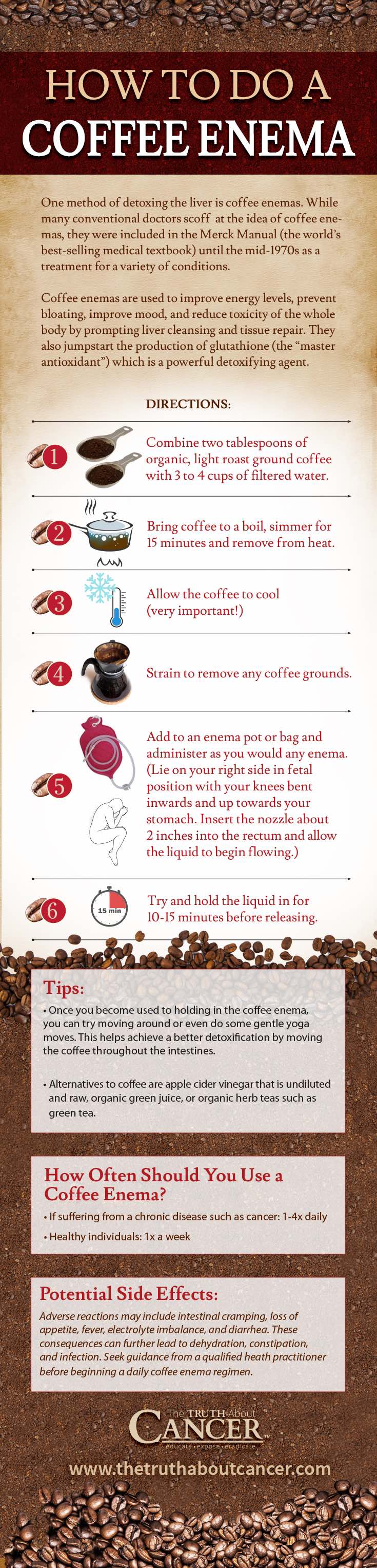 Live your life without the threat of cancer. Go here to be notified each week about new, cutting-edge information that impacts your health.  Article Summary
[+] Sources and References download now
Subscribe to:
Posts (Atom)
| ||||||||||||||||
|---|---|---|---|---|---|---|---|---|---|---|---|---|---|---|---|---|---|