Showing posts with label injuries. Show all posts
Showing posts with label injuries. Show all posts
Wednesday, November 30, 2016
Dog Leg Injuries
Dog Leg Injuries

Injuries to a dog can be distressing not only for the pet but also for the dog owner. Canine or dog leg injuries are one of the most common traumatic injuries in dogs. As a matter of fact, it does not really take much to injure a dogs leg. Everyday activities like running and sprinting around can result in cuts, sprains, torn ligaments and even broken bones in your pet. It is vital that as soon as you identify the symptoms of a leg injury in a dog, immediate assistance by your veterinarian should be solicited who can advise the appropriate dog care. This can help find the causes of the injuries which range from mild and benign to severe and life-threatening. However, in the absence of immediate care even the mildest of the injuries can become critical to the dogs health.
Causes of Dog Leg Injuries
Leg injuries in dogs can be attributed to the injuries on the skin, muscles, ligaments, tendons and bones or even a hurt paw. When you visit the vet make sure that you pay attention to what his prescriptive medical aid and precautions that need to be administered to avert such leg injuries in the future.
Dog Paw Injuries: The pads on the bottom of a dogs foot are prone to injury from glass, hot pavements etc. Also, healing can be difficult due to the paw pads exposure to bacteria and pressure from standing on the injured foot. If you find the dog limping then inspect its paw for cuts, punctures or swollen areas. If it is injured then the dog will react to the pressure being put on the paw. If you find a deep cut or a shred of glass embedded in the paw, then you need to go to a veterinarian. Also, paw injuries may be caused when the nails of the dogs are torn or cracked. If you find the nails chipped and bleeding, then the damaged part must be removed either at home or by a veterinarian. Remember that since this type of injury is likely to become infected, an antibiotic treatment may be needed.
Canine Ligament Injuries: A serious orthopedic knee injury in the dogs is a ruptured cruciate ligament. When the anterior cruciate ligament (the ligaments that prevent the ends of the femur and tibia from moving back and forth across each other) is torn, the joint becomes unstable. This causes the femur and tibia to move back and forth across each other and puts too much tension on the ligament causing it to tear. The most common reasons for the occurrence of this injury is when the dog slips on a slippery surface, makes a sudden turn while running, or is hit by a car. Also dog obesity can result in too much weight on the knees.
Tendon Tears: Although not as common as ligament injuries, tendon tears or strains can be quite painful for dogs. Tendonitis, or inflammation of the tendon can occasionally occur with excessive running or jumping by the dog.
Muscular Sprains and Strains: One of the common reasons for dog leg injuries are muscular sprains and strains. These are characterized by swelling of the affected area and an inability to move the muscular joint. This is usually caused during rough play or icy, muddy or slippery conditions, that can cause the joint to move in a sharp, unnatural direction, resulting in the ligaments being stretched or torn.
Bone Fractures: When excessive stress is put on the skeletal frame of the legs, it might cause fractures of the bones. There are many types of bone fractures like closed fractures, compound fractures, epiphyseal fracture (when the growth plate is fractured) and a greenstick fracture (bone is cracked).
Symptoms to Detect Leg Injuries
- Limping
- Foot Dragging
- Stiff Gait Pattern (generally associated with arthritis)
- Pain
- Swelling
- Bleeding and Wounds
- Snappy behavior
- Lethargy
For treating wounds or in case of a broken nail involving bleeding, the foot must be washed with an anti-bacterial soap. Be very careful while doing so, as it may result in a painful experience for the dog. Be gentle in your movements while you clean the wound. If there are some embedded debris, remove it with a pair of tweezers and then disinfect the wound using an antibiotic ointment. In case of any fractures or dislocation of the joints, owners should not try to re-align the joint all by themselves. You may unknowingly, end up doing more harm than good. Instead, what you could manage to do, is to splint the dogs foot and seek immediate veterinary attention. If the condition thrives on neglect, severed arteries, muscular damage and compound fractures can occur, if left unsplinted and untreated. Once the leg is splinted, the foot should be immobilized to prevent further injury.
Remember to consult a veterinarian for further advice. Identifying a dog leg injury and providing appropriate medical care, goes a long way in saving the dog from other serious health problems.
download now

Tuesday, August 16, 2016
Gun Injuries More Often Fatal Now Study Finds MedlinePlus
Gun Injuries More Often Fatal Now Study Finds MedlinePlus
Gun Injuries More Often Fatal Now, Study Finds: MedlinePlus


Gun Injuries More Often Fatal Now, Study Finds
ERs seeing more severe wounds and deaths than they used to, researchers report


Tuesday, June 14, 2016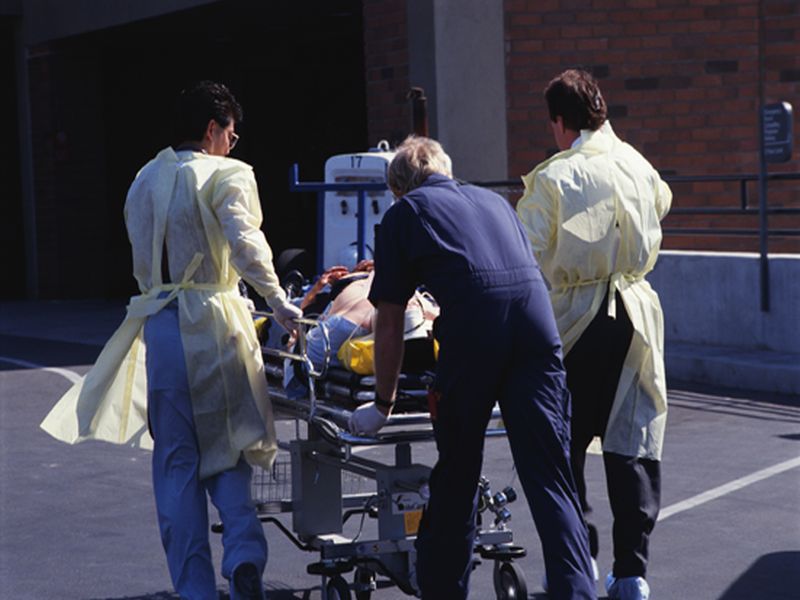
TUESDAY, June 14, 2016 (HealthDay News) -- Injuries from senseless gun violence -- like those witnessed in Orlando on Sunday morning -- may be increasing in severity in ERs across the United States, a new study suggests.
"Americans mourn firearm-related fatalities every day," said lead researcher Dr. Angela Sauaia, a professor of public health and surgery at the University of Colorado, in Denver. "Mass shootings are just the tip of the iceberg of the daily tragedy witnessed by trauma surgeons in emergency rooms," she added.
Much of that trauma can be traced to increasingly powerful firearms, such as the assault rifle used in the weekend massacre at the Pulse nightclub that left 49 people dead and 53 wounded, experts say.
Sauaias study was based on nearly 29,000 patients who came to the trauma center at the Denver Health Medical Center from 2000 to 2013. Just under 6 percent arrived with gunshot wounds. Among those who had been shot, the number of deaths increased significantly, as did the severity of their wounds.
While technology and education are helping to make cars and bicycles safer, "firearms are moving in the exact opposite direction," Sauaia said. "They are becoming progressively more dangerous."
If you are in a car crash today, you are more likely to survive than you were 10 years ago due to safer cars and improvements in trauma care, Sauaia noted.
"However, if you get shot today, you are more likely to die than if you were shot 10 years ago, despite our excellent trauma care," she said. "Firearm injuries are becoming more lethal due to an increased number and severity of wounds they inflict."
The data comes from only one trauma center, so the findings cant be generalized, she said. However, according to the U.S. Centers for Disease Control and Prevention, nearly 34,000 Americans died from gunshot wounds in 2013.
Regardless of how people feel about gun control, "there are a number of things we can all agree upon," Sauaia suggested. These include:
- Children and people who are mentally unstable should not have access to unlocked, loaded guns.
- Use technology to improve the safety of guns.
- Add counseling about firearm safety in primary care.
"We should start the discussion on these common grounds," she said.
Of the nearly 29,000 patients included in the study, almost 6 percent had gunshot wounds and just over 6 percent had stab wounds. In addition, about 7 percent were pedestrian accidents, 9 percent were assaults, 24 percent were from falls, 26 percent from car crashes and 22 percent from other injuries. Of these, more than 5 percent died, the researchers found.
Over the study period, the number of deaths from gunshot wounds increased significantly, while deaths from other types of trauma either remained stable or decreased, the findings showed.
The report was published June 14 in the Journal of the American Medical Association.
Dr. Robert Glatter is an emergency physician at Lenox Hill Hospital in New York City. He said, "While this is only a single-center study, it is a continuing reminder that we need to focus our efforts to find practical approaches -- through policy and other grassroots efforts -- to reduce gun violence in our communities."
Even if you survive a gunshot wound, the suffering may continue, he added.
"After gunshot wounds inflict their immediate damage, long-term effects may include poorly healing fractures, injuries to nerves and blood vessels, as well as the potential for infections that may lead to chronic disability and require long-term care," Glatter explained.
"With assault rifles we see more severe wounds, inflicting greater damage to organs and blood vessels, often leading to prolonged hospital stays," he said.
"These weapons belong on a battlefield -- not on the streets," Glatter added.
These injuries and deaths are largely preventable, he noted.
"Our society should not continue to fall victim to a method of violence that we have the ability to set clear public policy to control," Glatter said.
SOURCES: Angela Sauaia, M.D., Ph.D., professor, public health and surgery, University of Colorado, Denver; Robert Glatter, M.D., emergency physician, Lenox Hill Hospital, New York City; June 14, 2016, Journal of the American Medical Association
HealthDay
Copyright (c) 2016 HealthDay. All rights reserved.
News stories are provided by HealthDay and do not reflect the views of MedlinePlus, the National Library of Medicine, the National Institutes of Health, the U.S. Department of Health and Human Services, or federal policy.
- More Health News on:
- Gun Safety
- Health Statistics
download now
Subscribe to:
Posts (Atom)